By Emily Parker
Updated November 2026
The ultimate push pull legs system PDF is not one single document. It is a printable, week-by-week push/pull/legs plan that lists exercises, sets, rep ranges, rest periods and a progression method. A good one lets you train three days a week or six, and tells you exactly how heavy to go and when to add weight. The best versions are simple enough to follow on a phone at the gym and specific enough that you never have to guess what to do next.
Why a printable PPL PDF works better than a loose plan
Most people who quit a training split do not quit because the exercises were wrong. They quit because they forgot which day came next, lost track of how many sets they had done, or could not remember what weight they used last week. A PDF removes that friction. It sits on your phone or clipboard, shows the whole cycle at a glance, and gives you a place to write numbers down.
Shopping for one? See our guide: 7 Best Push Pull Legs Split Posters and Training Aids for 2026.
The push/pull/legs structure itself is also well suited to a printed format. Each training day groups muscles by movement pattern: pushing muscles (chest, shoulders, triceps), pulling muscles (back, rear delts, biceps) and leg muscles (quads, hamstrings, glutes, calves). Because each muscle group gets a clear home, the plan is easy to lay out in a table. For a deeper look at how the split is structured, see What's a Good Push Pull Legs Split? 7 Best Programs Compared (2026).
What a complete PPL PDF should include
Before you download or print anything, check that the document contains the following. A plan missing any of these will leave you improvising.
- Training days per week. Three days (one of each push, pull, legs) is the baseline. Six days (push, pull, legs twice) is the high-frequency version.
- Exercise order. Compound lifts come first, isolation work after. A push day should start with a heavy pressing movement, not curls.
- Sets and rep ranges. Typical hypertrophy ranges are 3 to 4 sets of 6 to 12 reps for most exercises, with heavier work of 4 to 6 reps on the main lifts.
- Rest periods. Roughly 2 to 3 minutes on heavy compounds and 60 to 90 seconds on isolation work.
- A progression rule. For example: when you hit the top of the rep range on every set, increase the load by the smallest increment available and drop back to the bottom of the range.
- A deload or recovery note. Every 4 to 8 weeks, a lighter week helps prevent accumulated fatigue from stalling progress.
If you want a fully written example to compare against, Sample Push Pull Legs Routine: A 6-Day Plan With Sets and Reps shows how those elements look in practice. For a longer timeline, 12 Week Push Pull Legs Program PDF: Printable Plan With Sets and Reps lays out a progression across a full training block.
Choosing between a 3-day and 6-day version
The three-day PPL is the right starting point for most people. It leaves recovery time between sessions and fits a busy schedule. The six-day version trains each muscle group twice a week, which many lifters find effective for building muscle, but it demands more sleep, food and planning. Be honest about your recovery before picking the longer plan. If you are newer to lifting, Quick Push Pull Legs Routine: A Step-by-Step 3-Day Plan is a sensible place to start.
If you are unsure which split suits your goals, compare it against other options such as Push/Pull Legs vs Full Body (2026): Which Is Better for Your Goals? before committing for several months.
How to use the PDF week to week
- Print the plan or save it to your phone, and write your starting weights next to each exercise.
- Warm up with two or three lighter sets of the first exercise before working sets.
- Log every set: weight, reps, and whether the last rep felt hard. Stop each set with one or two reps left in the tank.
- When every working set reaches the top of the rep range, increase the weight next session.
- If you stall for two or three weeks on the same lift, reduce the load by about 10 percent, rebuild, or swap in a similar movement.
- Track sleep, soreness and appetite. Persistent fatigue, joint pain or declining performance are signs to take a deload week early.
Equipment and substitutions
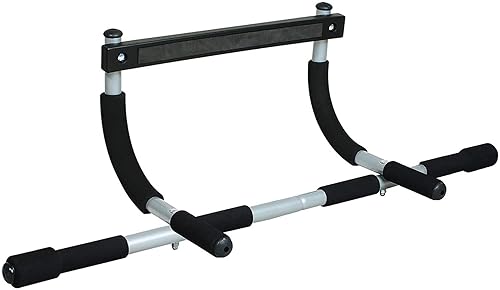
Most PPL PDFs assume a full gym, but the structure works with fewer tools. Dumbbells, a bench and a pull-up bar cover most movements. Resistance bands can stand in for cables on pulling and pressing accessories. If you train at home, Push/Pull Legs Dumbbell 3 Day: A Step-by-Step Plan for Home or Gym shows how to adapt the template without a barbell rack.
What we’d use
Keeping a plan visible and tracking your numbers is simpler with a few basics on hand. These are useful, though none is required.
- Resistance bands for warm-ups and band-assisted pulling variations. Look for a set with multiple resistance levels. View on Amazon
- An adjustable dumbbell set so you can add small load increments on accessory work. View on Amazon
- A training log notebook to record sets, reps and loads alongside your printed plan. View on Amazon
Related questions
Is a push pull legs PDF good for beginners?
Yes, if you start with the three-day version and use lighter loads while you learn the movements. Focus on form and consistent logging before chasing heavy weights.
How long should I follow one PPL program?
Most structured plans run 6 to 12 weeks before a deload or a change in exercise selection. Stay on a plan long enough to measure progress, then adjust.
Can I combine PPL with cardio?
Yes. Keep cardio light on leg days, and separate hard conditioning sessions from heavy lifting when you can. Consult a doctor before starting a new training program if you have a medical condition.
What if I miss a day?
Resume with the next scheduled session rather than doubling up. Missing one session does not undo a training block, but repeated gaps will.
Do I need to follow the exact exercises in the PDF?
No. Swap an exercise for another in the same movement pattern if it causes discomfort or you lack the equipment. Keep the sets, reps and progression rule the same so the plan still works.
Ready to choose one?
About Emily Parker
Emily Parker is part of our editorial team and reviews and edits our workout programs & splits guides, checking product details against manufacturer specifications and owner feedback.