 By Graham Fisher
Updated November 2026
Creating a workout plan is the fastest way to turn good intentions into steady progress, but most people never get past a vague idea of “going to the gym.” The right book, log or printed chart can give you the structure you need. This list compares five options based on product listings, publisher descriptions and common owner feedback, covering step-by-step program guides, training journals and wall charts for home and gym use.
Best overall: How to Create a Workout Plan that Actually Works – View on Amazon
Best for home lifters: Mr. Pen Workout Log Book Planner – View on Amazon
Best for wall-mounted routines: Beginner to Intermediate Home Fitness Plan Chart – View on Amazon
Best for trainers and coaches: The Personal Trainer’s Client Workout Journal – View on Amazon
Best for beginners on a 4-week start: Ultimate Workout Plans for Every Fitness Level – View on Amazon
Our Top Picks
| Product | Best for | Key feature |
|---|---|---|
| How to Create a Workout Plan that Actually Works | Overall planning method | Step-by-step plan building |
| Mr. Pen Workout Log Book Planner | Home lifters tracking progress | 160-page hardcover log |
| Beginner to Intermediate Home Fitness Plan | Visual routine at home | Waterproof wall-mount chart |
| The Personal Trainer’s Client Workout Journal | Coaches planning sessions | Client progress tracking |
| Ultimate Workout Plans for Every Fitness Level | Beginners wanting a 4-week start | Plans across fitness levels |
How to Create a Workout Plan that Actually Works: Build Strength, Super Fat, and Stay Motivated

How to Create a Workout Plan that Actually Works: Build Strength, Super Fat, and Stay Motivated
Best for: Overall planning method
This book suits anyone who wants a clear process for choosing goals, picking exercises and setting weekly volume rather than copying random routines.
Pros
- Walks through goal setting and exercise selection in order
- Covers motivation alongside programming
Cons
- Less useful if you want a ready-made printed schedule
Mr. Pen Workout Log Book Planner for Home Workouts

Hardcover, A5 Workout Log Book Planner for Home Workouts, Tracking Progress, Gym Essentials and Achieving Your Wellness Goals Mr. Pen- Fitness Workout Journal for Women & Men, 5.8" x 8.2", 160 Pages
Best for: Home lifters tracking progress
A good fit for people training at home who want to record sets, reps and weights so each session builds on the last.
Pros
- Compact 5.8″ x 8.2″ size fits a gym bag
- Hardcover construction for repeated use
Cons
- Log format needs you to design your own split first
Beginner to Intermediate Home Fitness Plan

Beginner to Intermediate Home Fitness Plan, Waterproof, Wipe Clean Easily, Fridge & Wall Mount, Step by Step Exercises 6-Day Cycle Full Body Workout Plan Laminated Home Gym Charts 8.5”x11“
Best for: Visual routine at home
Ideal for people who prefer seeing a full weekly routine posted where they will notice it, such as on a fridge or garage wall.
Pros
- Waterproof, wipe-clean surface
- Six-day full-body cycle laid out step by step
Cons
- Fixed layout offers limited room for personal changes
The Personal Trainer’s Client Workout Journal
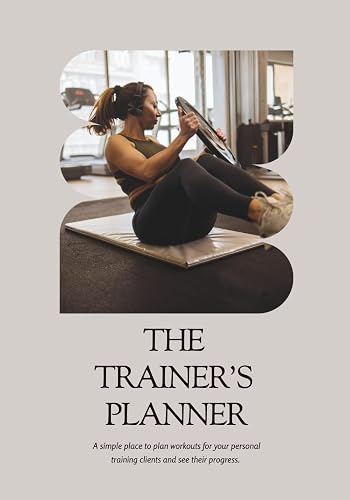
The Personal Trainer's Client Workout Journal: Plan, Track and Optimize One-on-One Training Sessions: A straightforward, pen-and-paper planner … organize and monitor client progress
Best for: Coaches planning sessions
Built for trainers who manage several clients and need to plan, track and adjust one-on-one sessions in a single place.
Pros
- Designed for session-by-session planning
- Space to monitor client progress over time
Cons
- Overbuilt for a solo lifter
Ultimate Workout Plans for Every Fitness Level

Ultimate Workout Plans for Every Fitness Level: Your 4-Week Guide to Getting Fit, Strong, and Energized
Best for: Beginners wanting a 4-week start
A practical choice for newer exercisers who want a structured four-week starting block before moving to a more advanced split.
Pros
- Plans organized by fitness level
- Four-week format is easy to follow
Cons
- Advanced lifters may outgrow the programming quickly
Buying Guide
Match the format to how you train
A written program guide helps you design a plan, while a log helps you run it. Choose a book if you are still building your split and a log if you already have one.
Decide between a visual chart and a journal
Wall charts keep the routine in front of you, which helps consistency. Journals give you space to record what you actually lifted, which is what drives progressive overload.
Plan for progression
A useful plan increases load, reps or sets over time. Look for resources that show how to add weight or volume each week rather than repeating the same workout indefinitely.
Consider who the plan is for
Beginner programs focus on learning movement patterns, while trainer-oriented tools assume you manage multiple clients. Pick the option that fits your experience level.
Good picks for this: How to Create a Workout Plan that Actually Works and Mr. Pen Workout Log Book Planner
FAQ
How many days a week should a workout plan include?
Most beginners do well with three full-body sessions per week, spaced across the week. More advanced lifters often add days once recovery and schedule allow.
How long should I follow one workout plan before changing it?
Many coaches suggest sticking with a program for about four to twelve weeks so you can measure progress. Adjust sooner if you stall, get injured or lose interest.
Should I track every workout?
Tracking sets, reps and weights makes progression easier to see. Even a simple log is enough to tell you when to increase the load. Consult a qualified professional before starting if you have a medical condition or injury.
Related reading
- Workout for Full Body: A Step-by-Step Plan That Hits Every Major Muscle (2026)
- Workout Routines Resistance Bands: 5 Steps to a Full-Body Plan
- Workout Routine for Shredding: A Step-by-Step Plan to Lean Out
- Workout Routine for Female Beginner: A Step-by-Step Plan (2026)
About Graham Fisher
Graham Fisher is part of our editorial team and reviews and edits our workout programs & splits guides, checking product details against manufacturer specifications and owner feedback.


