By Colin Foster
Updated November 2026
Choosing a workout routine to lose weight and gain muscle is harder than it sounds, because most plans lean heavily toward one goal and quietly sacrifice the other. We compared five training programs from established fitness publishers and authors, judging each on how it balances resistance training, progression, recovery and whether it fits a home or gym setup. Each pick below is a program you can follow with minimal guesswork.
At a glance:
Our top picks at a glance
- 1
 TOP CHOICEBest overallMen's Health Muscle After 40 At HomeView on Amazon
- 2
 TOP CHOICEBest for a short, intense cycleMen's Health 6-Week Lean Muscle Level-UpView on Amazon
- 3
 TOP CHOICEBest for a long-term progression planJim's Weight Training & Bodybuilding Workout PlanView on Amazon
- 4
 Best for variety and exercise options101 WorkoutsView on Amazon
- 5
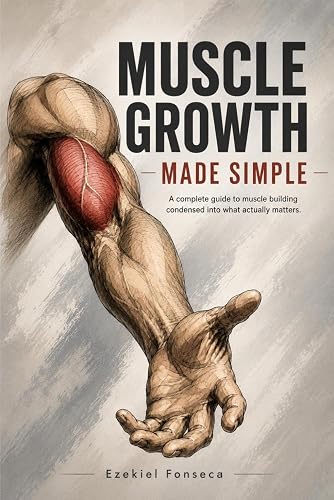 Best for learning the fundamentalsMuscle Growth Made SimpleView on Amazon
Our Top Picks
| Product | Best for | Key feature |
|---|---|---|
| Men’s Health Muscle After 40 At Home | Home training at minimal cost | 12-week plan, minimal equipment |
| Men’s Health 6-Week Lean Muscle Level-Up | Short, focused muscle growth block | Six-week structured progression |
| Jim’s Weight Training & Bodybuilding Workout Plan | Year-long progressive training | Full year of progressive weights |
| 101 Workouts | Exercise variety and fresh ideas | Large library of workout options |
| Muscle Growth Made Simple | Learning training principles | Condensed, principle-driven guide |
Men’s Health Muscle After 40 At Home
Men's Health Muscle After 40 At Home: Maximize gains using minimal equipment in this 12-week strength training plan you can do at home!
Best for: Home training that builds muscle while managing body composition. A related read: Exercises at Desk to Lose Weight: 10 Moves for Office Workers.
This plan suits readers who want a structured 12-week routine without a full gym. Publisher materials describe a focus on maximizing gains with minimal equipment, which makes it a sensible starting point for home lifters.
Pros
- Designed around minimal equipment
- Clear 12-week structure with progression
Cons
- Limited heavy loading options at home
Men’s Health 6-Week Lean Muscle Level-Up
Men's Health 6-Week Lean Muscle Level-Up: The Workout to Supercharge Muscle Growth Fast
Best for: A short, intense block to kick-start muscle growth.
This program suits lifters who prefer a defined six-week push over a long commitment. Its listing emphasizes fast muscle growth, so it works well as a focused phase before moving to a longer plan.
Pros
- Short, easy-to-plan timeline
- Clear focus on lean muscle growth
Cons
- Six weeks may need a follow-up program
Jim’s Weight Training & Bodybuilding Workout Plan
Jim's Weight Training & Bodybuilding Workout Plan: Build muscle and strength, burn fat & tone up with a full year of progressive weight training … (Weight training & resistance workouts)
Best for: Long-term progressive training that builds strength and tone.
This plan fits lifters who want a full year of structured weight training. Its listing covers building muscle, burning fat and toning up, which matches a combined weight loss and muscle gain goal.
Pros
- Full year of progressive programming
- Covers strength and body composition
Cons
- Long commitment may feel dense for beginners
101 Workouts
101 Workouts: Build Muscle, Lose Fat & Reach Your Fitness Goals Faster
Best for: Exercise variety and mixing up sessions.
This book suits readers who get bored with the same routine and want a broad menu of workouts. Its listing promises muscle building and fat loss, so you can rotate sessions to match your goals.
Pros
- Wide range of workout options
- Covers both fat loss and muscle building
Cons
- Requires you to build your own schedule
Muscle Growth Made Simple
Muscle Growth Made Simple: A Complete Guide to Building Muscle — Condensed Into What Actually Matters
Best for: Learning the principles behind muscle growth.
This guide suits beginners who want to understand why a routine works before following one. Its condensed format focuses on the core principles that drive muscle gain. Worth reading next: 5 Best Workout Routine to Lose Fat and Build Muscles: Top Picks (2026).
Pros
- Concise, principle-focused content
- Useful foundation for designing your own plan
Cons
- Less of a ready-made weekly schedule
Buying Guide
Match the Program to Your Training Setting
Decide whether you will train at home, in a gym, or both before choosing. Plans built for minimal equipment rarely match the heavy loading a full gym allows, so pick accordingly.
Look for Progressive Overload
A routine only builds muscle if the workload increases over time through added weight, reps or sets. Check that the program shows how and when to progress.
Balance Strength Work and Conditioning
Resistance training drives muscle gain, while added cardio or energy-expenditure work supports fat loss. Look for a plan that keeps strength training central instead of relying on cardio alone.
Consider Recovery and Schedule
Muscle grows during recovery, so a plan with a realistic number of training days per week is more likely to be followed. Adjust sessions to sleep and work demands.
Good picks for this: Men’s Health Muscle After 40 At Home and Jim’s Weight Training & Bodybuilding Workout Plan
FAQ
Can you lose weight and gain muscle at the same time?
Yes, especially for beginners and people returning to training, because resistance work and a moderate calorie deficit can work together. Results depend on nutrition, sleep and consistency. For a deeper look, 5 Best Gym Workout Routines for Muscle Gain: Top Picks Compared (2026) covers this in detail.
How many days a week should I train?
Three to four days per week is a common starting range for most people. Adjust based on recovery and the program you choose.
Related reading
- Workout Routine for Men to Gain Muscle: 4 Best Picks Compared (2026)
- Muscle Gain Workout Routine: A Step-by-Step Plan That Builds Size (2026)
- Best Workout Routine to Gain Muscle Mass: A 4-Day Plan (2026)
About Colin Foster
Colin Foster is part of our editorial team and reviews and edits our workout programs & splits guides, checking product details against manufacturer specifications and owner feedback.