By Emily Parker
Push pull legs vs Arnold split is one of the most common debates among lifters choosing a weekly training structure. Push pull legs (PPL) is the better pick for most intermediate lifters who want high weekly frequency with manageable session length and a clear division of muscle groups. The Arnold split suits lifters who have plenty of training days, want heavy emphasis on chest, back and shoulders, and can recover from two-muscle-group sessions repeated six times a week. Both programs build muscle when volume and effort are sufficient, so the choice comes down to schedule, recovery and which muscles you most want to prioritize.
Push Pull Legs vs Arnold Split: Side-by-Side Comparison
| Criteria | Push Pull Legs | Arnold Split |
|---|---|---|
| Muscle groups per session | Push: chest, shoulders, triceps. Pull: back, biceps, rear delts. Legs: quads, hamstrings, glutes, calves. | Two pairings per day: chest/back, shoulders/arms, legs/abs. |
| Typical training days | 3 to 6 days per week | 5 to 6 days per week |
| Weekly frequency per muscle | About 2x per week | About 2x per week (chest and back often 2x, arms and shoulders 2x) |
| Session length | Usually 60 to 75 minutes | Usually 75 to 90 minutes |
| Recovery demand | Moderate, with clear rest days between similar movements | High, since similar muscle groups are trained across consecutive days |
| Best for | Intermediate lifters, busy schedules, balanced physiques | Advanced lifters, upper-body emphasis, high training availability |
| Ease of scheduling | Flexible; works with 3-day or 6-day weeks | Requires near-daily gym commitment |
Training Frequency: Which Split Hits Muscles More Often?
Both splits can train each muscle roughly twice per week, which is a frequency supported by research on hypertrophy as a practical target. The difference is in how that frequency is delivered. A 6-day PPL runs push, pull, legs, push, pull, legs, so every major muscle gets two sessions spread across the week. A 6-day Arnold split runs chest/back, shoulders/arms, legs, then repeats, which also gives two exposures per muscle.
Winner: Tie. Both deliver similar weekly frequency. PPL achieves it with fewer total hours in the gym, while the Arnold split can be more demanding if you cannot schedule six sessions.
Volume and Set Count: Which Program Gives You More Work?
Total weekly volume is where the Arnold split often pulls ahead, mainly because each session pairs antagonist muscles (chest with back, biceps with triceps) and lets you move between them with shorter rests. Many lifters can complete 14 to 18 hard sets for chest and back each week on an Arnold schedule, while a typical PPL might program 10 to 16 working sets per muscle group depending on the day structure.
A practical example for PPL: on push day, 4 sets of barbell bench press at 6 to 8 reps, 3 sets of incline dumbbell press at 8 to 12, 3 sets of lateral raises at 12 to 15, and 3 sets of triceps pushdowns at 10 to 15. That is about 13 working sets, enough for most intermediates. An Arnold chest/back day might use 4 sets of bench press, 4 sets of pull-ups, 3 sets of incline press, 3 sets of barbell rows, and 3 sets of cable flyes, reaching roughly 17 sets across both muscle groups.
Winner: Arnold split for raw volume, but only if your recovery supports it. More volume without enough sleep and nutrition does not produce more growth.
Recovery and Fatigue Management
Recovery is the constraint that matters most for many lifters. In PPL, a push day is typically followed by a pull day, which uses different primary movements and lets the chest rest while the back works. Legs get a full rest from upper-body work. This layout reduces the risk of accumulating fatigue in the same joints and muscles.
The Arnold split can produce noticeably more systemic fatigue because it repeats heavy pressing and pulling movements on consecutive days, sometimes with the same muscles appearing on two days in a row. Lifters with shoulder irritation or limited sleep often find this layout hard to sustain past a few weeks. Those with joint issues or any existing injury should consult a physical therapist or physician before adopting a high-frequency upper-body program.
Winner: Push pull legs for most people, because its recovery pattern is easier to maintain over months.
Schedule Flexibility and Session Length
PPL scales well. You can run it three days per week as push/pull/legs with one rest day between, or six days as a full cycle. Each session fits comfortably in about an hour, which makes it easier to fit around work and family commitments. Missing one day does not break the structure; you can simply shift the rotation.
The Arnold split assumes you will be in the gym five or six days per week and that each session runs about 75 to 90 minutes. Skipping days creates awkward gaps, for example leaving chest and back untrained for a week. It works best for lifters who treat training as a fixed part of their routine.
Winner: Push pull legs for busy schedules and easier consistency.
Muscle Balance and Aesthetic Goals
The Arnold split was designed around balanced upper-body development, and its pairings give chest and back equal attention. Lifters who want pronounced upper-body proportions, particularly broad shoulders and a wide back, often find the Arnold structure satisfying. Its leg day is typically less frequent in volume terms if you do not program it carefully, so lower-body development can lag without deliberate effort.
PPL gives legs a dedicated, consistent slot, and both push and pull days include shoulder work, so overall balance is easy to maintain. Lifters who tend to neglect lower body will find PPL more forgiving.
Winner: Arnold split for upper-body emphasis; push pull legs for total-body balance.
Beginner and Intermediate Suitability
Beginners generally do better with a simpler structure that allows recovery and steady progression. PPL is usually the more practical starting point once you have learned basic lifts, though a full-body program may suit complete novices even better. The Arnold split demands good technique under fatigue, and beginners who try it often accumulate too much stress too quickly.
Winner: Push pull legs for beginners and intermediates.
Progression and Programming Tips for Either Split
Whichever program you choose, progression depends on tracking reps and load. A simple method is double progression: choose a rep range such as 8 to 12 for a given exercise, work up to the top of that range with good form, then increase the weight slightly and start again at the bottom. Aim to add reps or load most weeks on compound lifts, and rotate accessories every four to six weeks.
For PPL, a typical weekly plan might look like this:
- Push day: bench press 4×6 to 8, incline dumbbell press 3×8 to 12, overhead press 3×8 to 10, lateral raises 3×12 to 15, triceps pushdowns 3×10 to 15.
- Pull day: deadlift or Romanian deadlift 3×5 to 8, pull-ups 4×6 to 10, barbell row 3×8 to 10, face pulls 3×12 to 15, barbell curls 3×8 to 12.
- Leg day: squat 4×6 to 8, leg press 3×10 to 12, leg curl 3×10 to 12, walking lunges 3×10 per leg, calf raises 4×12 to 15.
For the Arnold split, pair chest and back in one session and shoulders with arms in another, keeping the same progression principles. Rest 2 to 3 minutes between heavy compounds and 60 to 90 seconds between isolation work.
Equipment You Will Need for Both Splits
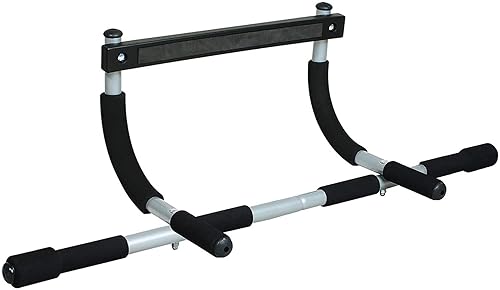
Both programs rely on a barbell, a power rack or squat stand with safety pins, a flat and incline bench, and adjustable or fixed dumbbells. Pull-up bars and cable machines round out the setup. If you train at home, a space-saving option such as a rack with pull-up attachment and a set of adjustable dumbbells covers most exercises. Dumbbells are a common choice here, and owners often report that adjustable models save space compared with a full rack of fixed weights.
For a single-piece option that handles many movements, a multi-station power tower or a squat rack with a lat pulldown attachment is widely used. Consider purchasing a lifting belt, wrist wraps and chalk as well if you plan to go heavy on compound lifts. Pick the setup that matches your floor space and budget, and remember that you can run either split with minimal equipment by substituting bodyweight and dumbbell movements.
Recommended products:
- Rogue Monster Lite Squat Rack (for a sturdy rack that supports both PPL and Arnold movements) View on Amazon
- Bowflex SelectTech 552 Adjustable Dumbbells (for adjustable weights when space is limited) View on Amazon
For more on dumbbell choices and storage, see Dumbbells: Fixed vs Adjustable, Safety and Storage. If you are setting up a PPL program, our Push Pull Legs Workout Plan: 6-Day Split With Sets and Reps gives full set and rep schemes you can print.
Which Should You Choose?
- Choose push pull legs if you train three to six days per week, have a busy schedule, want a balanced physique, or are an intermediate lifter who needs manageable recovery.
- Choose push pull legs if you have a history of shoulder or elbow irritation and want a split that rotates muscle groups with rest between them.
- Choose the Arnold split if you can train five or six days per week consistently and enjoy high-volume upper-body work.
- Choose the Arnold split if upper-body development, particularly chest, back and shoulders, is your top priority and you sleep and eat well enough to recover.
- Choose neither if you are a complete beginner; a full-body program will usually produce faster early progress.
For a broader look at PPL-based programs and tools, see 7 Best Push Pull Legs Split Programs and Tools for 2026. If your focus is building pulling and pressing strength, Upper-Body Exercises: Push and Pull Movements breaks down the movement patterns both splits rely on.
FAQ
Is the Arnold split better than push pull legs for building muscle?
Not necessarily. The Arnold split often delivers more weekly volume for chest and back, but PPL can build muscle just as effectively when volume is sufficient and recovery is good. The better split is the one you can run consistently.
Can I do push pull legs three days a week?
Yes. A three-day PPL with one session each for push, pull and legs trains each muscle about once per week. For best results, run it twice through, which means six sessions over two weeks, or move to four or six days if you can.
How many days per week is the Arnold split?
Most versions run six days per week, with one rest day. Five-day versions exist, but they usually compress the volume for each muscle group.
Which split is better for beginners?
For most beginners, PPL is a better starting point than the Arnold split because of its recovery demands and simpler scheduling. A full-body program is often better still for the first few months.
Can I combine elements of both splits?
Yes. Many lifters run a PPL and add an extra upper-body day, or use Arnold-style chest and back pairings within a three-day structure. Keep weekly frequency and recovery in mind when you adjust. If you have pain or an injury, consult a qualified physical therapist or doctor before changing your routine.
Conclusion
For most lifters, push pull legs is the more practical and sustainable choice. It offers good weekly frequency, flexible scheduling, reasonable session length and a recovery pattern that holds up over months. The Arnold split rewards lifters with plenty of training time, strong recovery habits and a priority on upper-body development. Match the split to your schedule and recovery capacity first, then refine volume and exercise selection over time.
About Emily Parker
Emily Parker is part of our editorial team and reviews and edits our workout programs & splits guides, checking product details against manufacturer specifications and owner feedback.