By Graham Fisher
Updated November 2026
Choosing the best workout plan for gaining muscle mass comes down to structure. A good program tells you what to lift, how many sets and reps to do, how to add weight over time, and how often to train each muscle group. We compared six widely sold muscle-building programs based on how complete their training structure is, how clearly they lay out progression, whether they include nutrition guidance, how much equipment they assume, and what owners commonly report about results and ease of following them. This is a research-based comparison, not a set of tested results.
Our top picks at a glance
- 1
 TOP CHOICEBest overallMen's Health Muscle After 40 At HomeView on Amazon
- 2
 TOP CHOICEBest for a short, intense cycleMen's Health 6-Week Lean Muscle Level-UpView on Amazon
- 3
 TOP CHOICEBest for pairing training with nutrition101 Muscle-Building Workouts & Nutrition PlansView on Amazon
- 4
 Best for a full-year progressionJim's Weight Training & Bodybuilding Workout PlanView on Amazon
- 5
 Best for a structured, high-volume splitThe M.A.X. Muscle Plan 2.0View on Amazon
- 6
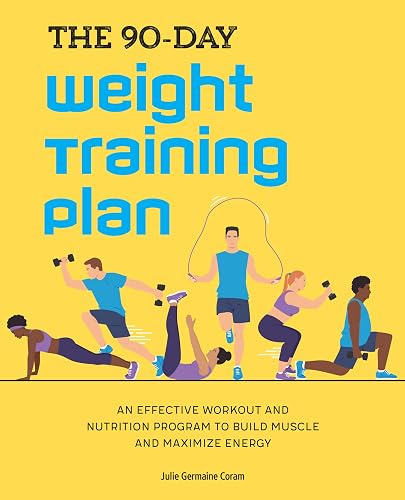 Best for a long-term, nutrition-linked programThe 90-Day Weight Training PlanView on Amazon
Our Top Picks
Quick Comparison
| Product | Best for | Key feature |
|---|---|---|
| Men’s Health Muscle After 40 At Home | Home training over 40 | 12-week minimal-equipment plan |
| Men’s Health 6-Week Lean Muscle Level-Up | Short, intense cycles | Six-week muscle growth focus |
| 101 Muscle-Building Workouts & Nutrition Plans | Training plus diet | Workouts paired with meal plans |
| Jim’s Weight Training & Bodybuilding Workout Plan | Year-long progression | Full year of progressive lifting |
| The M.A.X. Muscle Plan 2.0 | Structured high-volume training | Organized weekly training blocks |
| The 90-Day Weight Training Plan | Long-term structured gains | 90-day workout and nutrition program |
Men’s Health Muscle After 40 At Home
Men's Health Muscle After 40 At Home: Maximize gains using minimal equipment in this 12-week strength training plan you can do at home!
Best for: home training with minimal equipment, especially for lifters over 40.
This plan suits people who want to build size without a full commercial gym. Its focus on recovery-aware volume makes it a sensible starting point for older lifters. We also found 5 Best Workout Plans for Gaining Muscle: Top Picks Compared (2026) useful on this point.
Pros
- Designed around minimal equipment
- Clear 12-week structure with progression
Cons
- Limited loading options if you outgrow light equipment
Men’s Health 6-Week Lean Muscle Level-Up
Men's Health 6-Week Lean Muscle Level-Up: The Workout to Supercharge Muscle Growth Fast
Best for: short, intense training cycles aimed at visible muscle growth.
This program fits lifters who want a defined six-week push before reassessing. It works well as a block within a longer training year.
Pros
- Short duration makes it easy to commit to
- Focused on muscle growth rather than general fitness
Cons
- Six weeks is too short to be a complete long-term plan
101 Muscle-Building Workouts & Nutrition Plans
101 Muscle-Building Workouts & Nutrition Plans (101 Workouts)
Best for: training combined with nutrition guidance in one resource.
This book suits readers who want exercise variety and eating guidance together, rather than piecing a diet together separately.
Pros
- Large variety of workouts to rotate
- Includes nutrition plans alongside training
Cons
- Less guided progression than a single linear program
Jim’s Weight Training & Bodybuilding Workout Plan
Jim's Weight Training & Bodybuilding Workout Plan: Build muscle and strength, burn fat & tone up with a full year of progressive weight training … (Weight training & resistance workouts)
Best for: a full year of progressive weight training.
This plan is aimed at lifters who want a long runway of planned progression and are comfortable following a detailed schedule for months.
Pros
- Covers a full year, so progression is built in
- Targets muscle building and strength together
Cons
- Long format can feel dense for beginners
The M.A.X. Muscle Plan 2.0
The M.A.X. Muscle Plan 2.0
Best for: an organized, high-volume training split.
This program suits intermediate lifters who want a clearly organized weekly structure and are ready for higher training volume.
Pros
- Clearly organized weekly training blocks
- Built for lifters seeking higher volume
Cons
- Volume may be too demanding for beginners
The 90-Day Weight Training Plan
The 90-Day Weight Training Plan: An Effective Workout and Nutrition Program to Build Muscle and Maximize Energy
Best for: long-term structured gains with nutrition built in.
This plan fits people who want a three-month commitment that pairs lifting progression with energy and eating guidance.
Pros
- Combines workouts and nutrition in one program
- Ninety-day length supports measurable progression
Cons
- Requires consistent adherence over three months
Buying Guide
Training Structure and Progression
A muscle-gain plan should specify sets, reps, and how to add load over time. Without progression, most people plateau within a few months.
Schedule and Training Frequency
Look for a plan that matches the days you can realistically train. Most lifters build muscle with each muscle group trained at least twice a week.
Equipment Requirements
Check whether the plan assumes a full gym or works with dumbbells and bodyweight. A plan you can run consistently beats a better one you cannot access.
FAQ
How long does it take to see muscle gains from a workout plan?
Most people begin noticing changes in strength within the first few weeks of consistent training, while visible muscle growth usually takes two to three months. Results depend on training frequency, progressive overload, sleep, and how well you eat. Staying with one program for its full length gives you the best chance to judge whether it works for you.
Do I need a gym to follow one of these plans?
Not necessarily. Some of the programs in this comparison are designed around minimal equipment or home training, while others assume access to a full set of weights and machines. Check each plan’s equipment requirements before you commit so you choose one that matches your setup.
Is a beginner able to use these plans?
Several of these programs can work for beginners, but the best starting point depends on your experience with lifting. Beginners should focus on learning proper form and building a base of strength before pushing heavy loads. If you are new to resistance training, consider starting with the plan that has the clearest progression and the lightest early workload.
How much protein should I eat while gaining muscle?
Protein supports muscle repair and growth, and many people aim for a daily intake that fits their body weight and training volume. Plans that include nutrition guidance can help you structure your meals around this goal. Pairing training with adequate calories and sleep matters just as much as the workouts themselves.
How often should I train each muscle group?
Many muscle-building programs train each muscle group two to three times per week, though the ideal frequency varies with the plan’s structure and your recovery ability. Rest days between sessions for the same muscles give tissue time to recover and adapt. If you feel persistently fatigued or your performance drops, consider reducing volume or adding recovery time.
Can I combine two of these plans?
Mixing programs is generally not recommended because each one is built around its own progression and exercise order. Switching between plans can make it hard to track whether you are progressively overloading. It is usually better to choose one program that fits your goals and follow it consistently.
Conclusion
If you want a structured, progressive plan that fits a home setup or minimal equipment, the programs built for limited space are a strong fit, especially for those new to strength training. If you have access to a full gym and prefer detailed periodization and long-term progression, the longer, more comprehensive programs will serve you better.
Intermediate lifters who want nutrition guidance alongside training may get the most value from the all-in-one plans, while those who prioritize a specific training style should choose the program whose structure matches their goals. Whichever you pick, consistency and gradual progression will do more for your muscle growth than any single program alone.
Related reading
- Best Workout Routine to Gain Muscle Mass: A 4-Day Plan (2026)
- Best Workout Plan to Gain Muscle Mass: A 4-Day Step-by-Step Guide
- Best Workout Plan to Build Muscle Mass: A 4-Day Program With Sets and Reps
- Workout Routine for Gaining Muscle Mass: 3 Best Picks Compared (2026)
About Graham Fisher
Graham Fisher is part of our editorial team and reviews and edits our workout programs & splits guides, checking product details against manufacturer specifications and owner feedback.