 By Emily Parker
Updated November 2026
Someone searching for a hypertrophy coach push/pull legs resource usually wants one of three things: a clear split built around muscle growth, a way to track volume and progression, or a deeper look at the science behind hypertrophy training. This list covers six books and logbooks that fit those needs. The selection criteria were the scope of hypertrophy content (volume, frequency, rep ranges), how practical the programming is for a push/pull/legs split, whether the format supports logging and progression, and the general reputation of each title with readers. This is based on listing details and common reader feedback patterns, not on any hands-on testing.
Our top picks at a glance
- 1
 TOP CHOICEBest overallThe Hypertrophy Split: Training Frequencies, Volume Calculations, Push-Pull-LegsView on Amazon
- 2
 TOP CHOICEBest for logging workoutsPush Pull Legs Program and Training Log: Strength and Hypertrophy ProgView on Amazon
- 3
 TOP CHOICEBest for a minimalist logbookDO THE WORK.: The Push / Pull / Legs Training LogbookView on Amazon
- 4
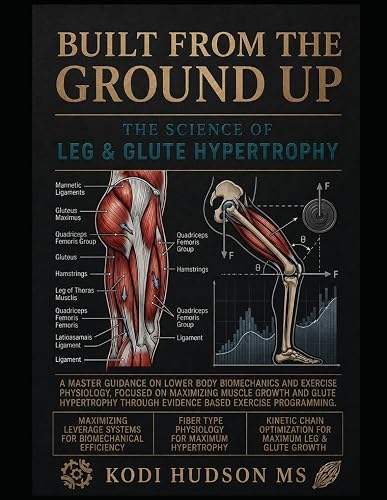 Best for lower-body growthBuilt From The Ground Up: The Science of Leg and Glute Hypertrophy (Team DYEL Fitness)View on Amazon
- 5
 Best for leg-day programmingCOMPLETE LEG WORKOUT: The Complete Guide to Muscle Hypertrophy, DefiniView on Amazon
- 6
 Best for a four-day PPL-style schedulePRPL Fitness Program : Push Run Pull Legs Fitness ProgramView on Amazon
Our Top Picks
Quick Comparison
| Product | Best for | Key feature |
|---|---|---|
| The Hypertrophy Split | Understanding frequency and volume | Covers training frequencies and volume calculations |
| Push Pull Legs Program and Training Log | Tracking progression | Combined program plus logbook |
| DO THE WORK. Push / Pull / Legs Training Logbook | Simple session logging | Dedicated push/pull/legs logbook layout |
| Built From The Ground Up | Lower-body hypertrophy | Focus on leg and glute growth science |
| Complete Leg Workout | Leg-day programming | Covers muscle development and definition |
| PRPL Fitness Program | Structured multi-day schedules | Push, run, pull, legs structure |
The Hypertrophy Split: Training Frequencies, Volume Calculations, Push-Pull-Legs
The Hypertrophy Split: Training Frequencies, Volume Calculations, Push-Pull-Legs
Best for: Understanding how frequency and volume drive muscle growth in a push/pull/legs setup.
This suits lifters who want the reasoning behind their split, not just a list of exercises. It is a good fit for intermediate trainees who plan to adjust volume over time.
Key specs
- Topic: hypertrophy training frequency and volume
- Covers volume calculations for push, pull, and leg days
- Focus: push/pull/legs programming
Pros
- Explains the logic behind frequency and volume choices
- Useful for building or adjusting your own split
- Directly relevant to push/pull/legs training
Cons
- Requires some prior training knowledge to get the most out of it
- Less focused on day-to-day logging
Bottom line: The best starting point for lifters who want to understand why a hypertrophy split is built the way it is.
Push Pull Legs Program and Training Log: Strength and Hypertrophy Program and Training Logbook
Push Pull Legs Program and Training Log: Strength and Hypertrophy Program and Training Logbook
Best for: Tracking sets, reps, and progression across a push/pull/legs program.
This is aimed at lifters who want a program and a place to record it in one book. It works well for anyone who tends to lose track of weekly volume.
Key specs
- Format: program plus training log
- Covers both strength and hypertrophy programming
- Designed around a push/pull/legs structure
Pros
- Combines programming and logging in one place
- Makes progression easy to measure over weeks
- Covers both strength and muscle-building goals
Cons
- Less background explanation than a science-focused title
- Fixed layout may not suit every custom split
Bottom line: A strong choice for lifters who want a ready-made plan and a log to track it.
DO THE WORK.: The Push / Pull / Legs Training Logbook
DO THE WORK.: The Push / Pull / Legs Training Logbook
Best for: Simple, distraction-free session logging for a push/pull/legs split.
This suits experienced lifters who already know their program and only need a clean place to record it. It is less useful for someone looking for programming guidance.
Key specs
- Format: dedicated training logbook
- Structured around push, pull, and legs sessions
Pros
- Focused layout with no filler content
- Easy to use in the gym during a session
- Keeps push, pull, and leg records separate
Cons
- Offers no programming or science content
- Requires you to already have a plan
Bottom line: The right pick for lifters who only need a logbook and already have their hypertrophy program set.
Built From The Ground Up: The Science of Leg and Glute Hypertrophy (Team DYEL Fitness)
Built From The Ground Up: The Science of Leg and Glute hypertrophy (Team DYEL Fitness)
Best for: Lower-body hypertrophy with a focus on legs and glutes.
This is for lifters who want to prioritize lower-body growth within a push/pull/legs schedule. It is especially relevant for those whose legs lag behind their upper body.
Key specs
- Topic: leg and glute hypertrophy
- Covers the science of lower-body muscle growth
Pros
- Narrow focus that goes deeper than general split guides
- Useful for prioritizing legs within a PPL week
- Explains the mechanics behind lower-body growth
Cons
- Not a complete push/pull/legs program on its own
- Limited coverage of upper-body training
Bottom line: Best for lifters who want to bring up their lower body and understand how to do it.
COMPLETE LEG WORKOUT: The Complete Guide to Muscle Hypertrophy, Definition, Strength, and Muscle Development
COMPLETE LEG WORKOUT: The Complete Guide to Muscle Hypertrophy, Definition, Strength, and Muscle Development
Best for: Structuring leg-day workouts for size, definition, and strength.
This suits lifters who want a dedicated leg resource to slot into a push/pull/legs week. It covers more than size alone, so it also appeals to those working on definition.
Key specs
- Topic: muscle hypertrophy, definition, and strength
- Focus: leg training
Pros
- Covers hypertrophy, strength, and definition together
- Gives a clear focus on leg-day structure
- Useful reference for planning weekly leg volume
Cons
- Narrower than a full push/pull/legs program
- Some content may overlap with general split guides
Bottom line: A practical pick for lifters who want to build a stronger, more developed set of legs within their split.
PRPL Fitness Program : Push Run Pull Legs Fitness Program
PRPL Fitness Program : Push Run Pull Legs Fitness Program
Best for: A structured multi-day schedule that adds conditioning to a push/pull/legs base.
This is for lifters who want more than lifting in their week and are comfortable fitting in running. It is less suited to anyone who wants a pure hypertrophy split with no cardio.
Key specs
- Format: multi-day fitness program
- Structure: push, run, pull, and legs sessions
Pros
- Adds conditioning alongside strength work
- Gives a clear weekly schedule to follow
- Useful for those who want variety in their training
Cons
- Running may reduce recovery for some lifters
- Less focused on pure hypertrophy programming
Bottom line: A good fit for lifters who want a push/pull/legs schedule with cardio built in.
Buying Guide
Check the hypertrophy focus
Look for explicit coverage of training volume, frequency, and rep ranges. Books that mention “hypertrophy” only in the title may offer little real programming. Titles that explain how sets and reps affect growth are more useful for a push/pull/legs split.
Good picks for this: The Hypertrophy Split, Complete Leg Workout
Decide between a program and a logbook
Some resources give you a plan, others only give you a place to record one. If you already have a split, a logbook is enough. If you are starting from scratch, choose a program-based title so you do not have to build the structure yourself.
Good picks for this: Push Pull Legs Program and Training Log, DO THE WORK. Push / Pull / Legs Training Logbook
Match the resource to your weak points
If one body area lags behind, pick a title that focuses on it. Lower-body growth, leg development, and general split design each call for a different resource. Matching the book to your priority saves time.
Good picks for this: Built From The Ground Up, Complete Leg Workout
Consider your schedule
A classic six-day push/pull/legs split is not for everyone. If you want a shorter week or want to add conditioning, look for resources that address those formats. Check whether the sample schedule fits the days you can train.
Good picks for this: PRPL Fitness Program, The Hypertrophy Split
Look at the level of detail
Beginners usually benefit from clear, step-by-step structure. Intermediate and advanced lifters often want the reasoning behind volume and exercise selection. Read the description or preview to see which level the author writes for.
Good picks for this: Push Pull Legs Program and Training Log, The Hypertrophy Split
Check the logging layout
If you plan to track every session, look at how the pages are laid out. Separate sections for push, pull, and legs day, space for weights and reps, and room for notes all make logging easier during a workout.
Good picks for this: DO THE WORK. Push / Pull / Legs Training Logbook, Push Pull Legs Program and Training Log
Think about durability and handling
A logbook you take to the gym will get sweaty and handled a lot. Look for sturdy covers and binding that lies flat. For reference books, a clear layout and an index make them easier to use between sessions.
Good picks for this: DO THE WORK. Push / Pull / Legs Training Logbook, The Hypertrophy Split
FAQ
What does hypertrophy coach push/pull legs mean?
It refers to a training approach that uses a push/pull/legs split with an emphasis on muscle growth. Push days cover chest, shoulders, and triceps; pull days cover back and biceps; leg days cover the lower body. The focus is on sufficient weekly volume and progressive overload rather than maximal strength.
How many days a week should a hypertrophy push/pull/legs split run?
Common setups run three or six days a week. Three days gives each muscle group one session per week, while six days allows each group to train twice. Many lifters prefer the six-day version for higher frequency, but it requires more recovery. Adjust based on your schedule and how you feel.
What rep range is typical for hypertrophy?
Many hypertrophy programs use roughly 6 to 15 reps per set, with most working sets falling in the 8 to 12 range. Exact targets vary by exercise and experience level. Taking most sets close to failure, while keeping good form, is a common approach.
Is a logbook necessary for muscle growth?
It is not strictly required, but tracking sets, reps, and weights makes it easier to apply progressive overload. Without records, it is harder to know whether you are actually adding load or volume over time.
Can a beginner use these resources?
Some are better for beginners than others. Program-based titles with step-by-step structure are generally more approachable. Titles that assume prior knowledge of training volume or exercise selection are better suited to intermediate or advanced lifters.
Should I change my diet when following a hypertrophy split?
Muscle growth depends on training and nutrition together, and protein intake and overall calories matter. For personalized advice, especially if you have a medical condition or dietary restrictions, consult a registered dietitian or your doctor.
Do I need to train to failure on every set?
No. Many hypertrophy programs work well when most sets stop one to three reps short of failure. Training to failure on every set increases fatigue and recovery demands. Use it selectively, especially on the last set of a movement.
Conclusion
For a clear explanation of the hypertrophy logic behind a split, The Hypertrophy Split is the strongest starting point. Lifters who want a program and logbook together should consider Push Pull Legs Program and Training Log. If you already have a plan and only need to record it, DO THE WORK. Push / Pull / Legs Training Logbook is the most direct option. Lifters who want to focus on lower-body growth should look at Built From The Ground Up or Complete Leg Workout, and those who want conditioning built into their week may find PRPL Fitness Program a useful schedule. Choose based on whether you need a plan, a log, or deeper science, and on which body areas you want to prioritize.
Sources
- Physical activity guidelines for adults, including recommended muscle-strengthening activity (cdc.gov)
- Research summaries on resistance training, muscle growth, and training volume (nih.gov)
- Position guidance on resistance training prescription from the American College of Sports Medicine (acsm.org)
Related reading
- 6 Day Push Pull Legs Hypertrophy: A Step-by-Step Plan for Muscle Growth
- Push/Pull Legs Hypertrophy Program PDF: A Step-by-Step Guide to Building Yours
- Push Pull Legs Workout Routine for Hypertrophy: A 6-Day Plan With Sets and Reps
- Push Pull Legs Hypertrophy: A Step-by-Step Guide to Muscle Growth
- Push Pull Legs Hypertrophy Workout: 5 Best Picks Compared (2026)
- Push Pull Legs Hypertrophy Program: A Step-by-Step Weekly Plan
- Intermediate-advanced Push Pull/legs Hypertrophy Program Pdf: A Practical Guide (2026)
- Push Pull Legs Workout Sets and Reps: A Complete Guide (2026)
About Emily Parker
Emily Parker is part of our editorial team and reviews and edits our workout programs & splits guides, checking product details against manufacturer specifications and owner feedback.