 By Graham Fisher
Updated November 2026
Running a push pull legs program at home comes down to one question: do you have enough equipment to cover pushing, pulling and leg movements with progressive load? Home setups range from a single resistance band to a full multi-station machine, and the right choice depends on your space, your budget and how heavy you need to lift. This comparison focuses on the criteria that matter most for a three-day split: load range, the ability to do both vertical and horizontal pulls and presses, leg training capacity, footprint, and whether the setup supports adding weight over time. Each pick below is a real product sold on Amazon US, described from manufacturer specifications and common owner feedback rather than personal testing.
Our top picks at a glance
- 1
 TOP CHOICEBest overallMultifunctional Strength Training Equipment with Lat Pulldown, Chest PView on Amazon
- 2
 TOP CHOICEBest for small spacesPilates Equipment Heavy Duty Pilates Bar Kit with Resistance BandsView on Amazon
- 3
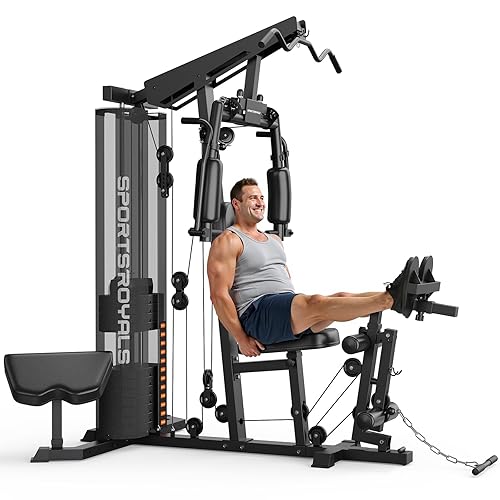 TOP CHOICEBest for progressive weight stacksSPORTSROYALS Home Gym Workout Station with 150LBS Weight StackView on Amazon
- 4
 Best for pulley-based workXGSW Multi-Function Home Gym Workout Station with Pulley SystemView on Amazon
- 5
 Best budget pickFigure 8 Resistance Band Set with HandlesView on Amazon
Our Top Picks
Quick Comparison
| Product | Best for | Key feature |
|---|---|---|
| JEEKEE Multifunctional Strength Training Equipment | Complete push, pull and leg coverage | Lat pulldown, chest press and leg extension in one frame |
| Pilates Equipment Heavy Duty Pilates Bar Kit | Small spaces and lighter loads | Bar kit with resistance bands for portable use |
| SPORTSROYALS Home Gym Workout Station | Progressive overload with a weight stack | Stack-based resistance for full-body strength work |
| XGSW Multi-Function Home Gym Workout Station | Pulley-based pulling and arm work | Pulley system with arm and leg trainers |
| Figure 8 Resistance Band Set | Budget-friendly accessory training | Three adjustable tubes with handles |
JEEKEE Multifunctional Strength Training Equipment with Lat Pulldown, Chest Press, Chest Fly, Low Row and Leg Extension
Multifunctional Strength Training Equipment with Lat Pulldown, Chest Press, Chest Fly, Low Row & Leg Extension, 35+ Exercises JEEKEE Home Gym with Leg Press, 8-in-1 Workout Station, 150 LB Weight Stac
Best for: Complete push, pull and leg coverage
This suits someone who wants every major movement pattern of a push pull legs split on one machine and has the floor space to accommodate a multi-station frame. It is a strong fit for lifters who want to progress load on lat pulldowns, rows and presses without buying separate equipment.
Key specs
- Listed with lat pulldown, chest press, chest fly, low row and leg extension stations
- Listing names 35+ exercises and a 150 lb weight stack
- 8-in-1 workout station design with leg press capability
Pros
- Covers vertical pull, horizontal pull, pressing and leg work
- Weight stack allows progressive overload without changing equipment
- Consolidates several machines into one footprint
Cons
- Requires significant floor space and careful assembly
- Stack loading may feel limited for very heavy lower-body work
Bottom line: The most complete option here for someone who wants full push, pull and leg coverage in one unit and has room for it.
Pilates Equipment Heavy Duty Pilates Bar Kit with Resistance Bands
Pilates Equipment, Heavy Duty Pilates Bar Kit with Resistance Bands, Portable Gym Adjustable Exercise Bands, Home Squat Training, Arm, Abs, Waist, Chest Strength Workout Equipment for Men
Best for: Small spaces and lighter loads
This kit is a practical choice for someone training in an apartment or spare room who needs a compact way to add resistance to pressing, pulling and squatting patterns. It works best for those building a foundation or supplementing bodyweight training rather than chasing heavy top-end loads.
Key specs
- Pilates bar kit with adjustable resistance bands
- Designed for arm, chest, back, abs and squat exercises
- Portable format that stores easily
Pros
- Very small footprint for home use
- Flexible for push, pull and leg movements
- Low setup effort compared with machines
Cons
- Resistance ceiling is limited for advanced strength goals
- Bands can wear over time and need periodic inspection
Bottom line: A good pick for small-space lifters who want versatile push, pull and leg work without a machine.
SPORTSROYALS Home Gym Workout Station with 150LBS Weight Stack
SPORTSROYALS Home Gym, Workout Station with 150LBS Weight Stack, Multifunctional Home Gym Equipment, Exercise Equipment for Full Body Strength Training
Best for: Progressive overload with a weight stack
This station fits someone who wants a stack-based system that can grow with their strength over the coming months. It suits intermediate lifters who want to track weight progression on pulls, presses and leg exercises across the three training days.
Key specs
- Listed with a 150 lb weight stack
- Multifunctional station for full-body strength training
- Designed for home gym use
Pros
- Stack-based loading makes logging progression simple
- Supports a range of pushing and pulling exercises
- Suitable for a dedicated home gym corner
Cons
- Requires a stable floor and clearance around the unit
- Leg training may need additional attachments or a separate bench
Bottom line: Best for lifters who want measurable, stack-based progression and have dedicated space for a station.
XGSW Multi-Function Home Gym Workout Station with Pulley System
XGSW Multi-Function Home Gym Workout Station, Featuring a Pulley System, arm Trainer, and Leg Trainer for Full-Body Workouts.
Best for: Pulley-based pulling and arm work
This station is aimed at someone who wants smooth pulley-driven pulls and dedicated arm and leg trainers. It suits lifters who value cable-style resistance for rows, curls and triceps work alongside their pressing and leg days.
Key specs
- Pulley system for multi-angle pulling
- Includes arm trainer and leg trainer attachments
- Designed for full-body workouts
Pros
- Pulley resistance suits rows and pulldown variations
- Attachments add arm and leg variety
- Compact compared with large multi-station frames
Cons
- Pulley stations usually cap at lighter loads than full stacks
- Owners often recommend checking cable wear periodically
Bottom line: A strong option for pulling-focused home training with added arm and leg accessories.
Figure 8 Resistance Band Set with Handles
Figure 8 Resistance Band Set,3-Tube Adjustable Bands,ABS,Core,Waist, Arm,Leg,3 Home Workout Chart for Women Multifunction Pedal Resistance Band with Handle Set,Pink
Best for: Budget-friendly accessory training
This is the lowest-commitment way to run a push pull legs program at home. It suits beginners or anyone adding accessory work on top of another setup. Bands cover rows, presses, curls and lower-body movements when paired with a sturdy anchor point.
Key specs
- Three adjustable resistance tubes
- Handles included for pulling and pressing
- Suitable for arm, core, waist and leg exercises
Pros
- Easy to store and move between rooms
- Multiple tubes allow varied resistance levels
- Works well for warm-ups and accessory sets
Cons
- Resistance is limited for heavy compound lifts
- Tubes and handles should be checked for wear before each session
Bottom line: A sensible starting point for beginners or as an accessory tool alongside heavier equipment.
Buying Guide
Load Range and Progressive Overload
A push pull legs split only works if you can add load over weeks. Look for a weight stack, adjustable bands with clearly marked tension levels, or a setup that lets you increase resistance on the same movement. If you cannot progress on rows and presses, the program stalls quickly.
Good picks for this: JEEKEE Multifunctional Strength Training Equipment, SPORTSROYALS Home Gym Workout Station
Vertical and Horizontal Pulling Options
A complete pull day needs both a vertical pull (pulldown or pull-up pattern) and a horizontal pull (row pattern). Check whether the setup covers both. Machines with a lat station and a low row cover this well, while bands require a secure anchor for rows.
Good picks for this: JEEKEE Multifunctional Strength Training Equipment, XGSW Multi-Function Home Gym Workout Station
Leg Training Capacity
Leg day is often where home setups fall short. Check whether the unit includes a leg extension, leg press or leg trainer attachment, and whether you can perform squats or hinges safely. Bands and bar kits can supplement but rarely replace a dedicated leg station for heavy work.
Good picks for this: JEEKEE Multifunctional Strength Training Equipment, Pilates Equipment Heavy Duty Pilates Bar Kit
Footprint and Space Requirements
Measure your floor before buying. Multi-station machines often need a clear area well beyond the frame itself so you can move through the full range of each station. Compact bar kits and band sets suit smaller rooms. Plan at least a few feet of clearance on each side of any frame.
Good picks for this: Pilates Equipment Heavy Duty Pilates Bar Kit, Figure 8 Resistance Band Set
Stability and Anchoring
A stable setup prevents injury and wasted sets. Check that the frame sits flat, that cables and stacks run smoothly, and that any band anchor is rated for the load. Owners frequently mention that loose hardware is the most common issue, so tighten bolts after the first few sessions.
Good picks for this: SPORTSROYALS Home Gym Workout Station, XGSW Multi-Function Home Gym Workout Station
Durability and Maintenance
Resistance bands degrade with heat, sunlight and repeated stretching, so inspect them for nicks or thinning. Cables, pulleys and stacks should be checked for fraying and lubricated according to the manufacturer’s instructions. Replace worn components rather than risking a failure mid-set.
Good picks for this: XGSW Multi-Function Home Gym Workout Station, Figure 8 Resistance Band Set
Matching the Setup to Your Training Goals
If your goal is maximal strength on compound lifts, prioritize a weight stack or a full multi-station unit. If you are building a base, lighter bands and bars can carry you a long way. Match the equipment to the heaviest load you realistically expect to use within the next six months.
Good picks for this: JEEKEE Multifunctional Strength Training Equipment, Figure 8 Resistance Band Set
FAQ
Can I run a push pull legs program at home without machines?
Yes. Bodyweight variations, resistance bands and a set of adjustable dumbbells can cover pushing, pulling and leg movements. Progression relies on increasing reps, slowing tempo, or moving to harder variations. A machine or weight stack makes progressive overload easier to track, but it is not required.
How many days a week should a home push pull legs split run?
The classic version uses three days: push, pull and legs, with rest days between the sessions. Many lifters then repeat the cycle over a week, so each muscle group trains roughly twice. Start with the three-day structure and adjust based on recovery.
How many sets and reps should I do per exercise?
A common starting range is three to four working sets per exercise in the 8 to 12 rep range for most movements. Compound lifts may use slightly lower reps when you have the equipment to progress them. Keep one to two reps in reserve on most sets and increase load when you can complete the top of the rep range with good form.
Do resistance bands provide enough resistance for legs?
Bands can work well for glute bridges, lateral walks, and light squats or hinges, especially at higher reps. For heavier lower-body training, you will typically need a stack, a leg station, or external weights. Consider supplementing bands with bodyweight progressions as you advance.
How long should I rest between sets?
For strength-focused sets, rest around two to three minutes between heavy compound exercises. For accessory work and higher-rep sets, one to ninety seconds is often enough. Longer rest helps maintain load quality on heavy pulls and presses.
Is a push pull legs split suitable for beginners?
It can be, provided you learn the core movements with lighter loads first. Beginners sometimes benefit from a full-body routine for the first few weeks before moving to a split. Consult a qualified coach or healthcare professional before starting if you have an existing injury or medical condition.
Which setup should I start with?
If space and budget are limited, begin with resistance bands and a bar kit and focus on form and progression. If you have room and want to track load over time, a multi-station machine offers the most complete coverage. Choose based on the heaviest load you expect to use and the space you can dedicate.
Conclusion
The best push pull legs program at home depends on the equipment you can fit and the loads you want to progress. The JEEKEE station offers the most complete coverage across pushing, pulling and leg work. The SPORTSROYALS and XGSW stations suit lifters who want stack or pulley-based progression. The Pilates bar kit works well in small spaces, while the Figure 8 band set is the most accessible entry point. For broader program structure, see Push Pull Legs Routine Home Gym: 7 Best Picks for 2026 and Push/Pull Legs Dumbbell 3 Day: A Step-by-Step Plan for Home or Gym. For a resistance-only build, Push Pull Legs Routine at Home: 7 Best Resistance Bands for 2026 is a useful companion.
Sources
- Physical activity guidelines covering strength training frequency and recommended adult activity levels (cdc.gov)
- Position guidance on resistance training volume, progression and load selection (acsm.org)
- Consumer safety information on home exercise equipment setup and maintenance (cpsc.gov)
Related reading
- Bodyweight Push Pull Legs: A Step-by-Step Home Program
- Upper Body Lower Body Push Pull Legs: 5 Best Programs Compared (2026)
About Graham Fisher
Graham Fisher is part of our editorial team and reviews and edits our workout programs & splits guides, checking product details against manufacturer specifications and owner feedback.