By Colin Foster
Updated November 2026
Push pull legs exercises are the movements you group into three training days: pushing muscles (chest, shoulders, triceps), pulling muscles (back, rear delts, biceps) and leg muscles (quads, hamstrings, glutes, calves). By the end of this guide you will know which lifts belong on each day, how many sets and reps to program, how to order exercises within a session, and how to progress them over time.
Why Push Pull Legs Exercises Work So Well
The push pull legs split organizes training by movement pattern rather than by body part alone. Pressing muscles get trained together, pulling muscles get trained together, and the lower body gets its own session. This matters because the muscles in each group share a role in the same kind of motion, so you can train them hard while still giving them enough recovery before the next session. Most lifters run the split three to six days per week, with each muscle group hit roughly two times weekly.
Shopping for one? See our guide: 5 Best Exercises for Push Pull Legs Split: Best Picks Compared (2026).
The exercises you choose matter as much as the split itself. A good push pull legs program balances compound lifts, which load several joints and large muscles at once, with isolation work that targets a single muscle. Compounds build overall strength and mass efficiently, while isolation exercises fill in gaps and address weak points.
Push Day Exercises
Push day covers the chest, front and side shoulders, and triceps. Start with a horizontal press, move to an incline or overhead press, and finish with isolation work for the triceps and side delts.
Primary Push Movements
- Barbell bench press: The foundation of most chest programs. Keep your shoulder blades retracted and feet planted.
- Incline dumbbell press: Emphasizes the upper chest. Set the bench around 30 degrees to keep the work on the chest rather than the front delts.
- Standing overhead press: The main shoulder builder. Brace your core and keep the bar path close to your face.
- Seated dumbbell shoulder press: A good alternative if you have shoulder or lower back concerns with standing pressing.
Accessory Push Movements
- Cable or dumbbell lateral raises: Target the side delts. Use light loads and control the descent.
- Triceps pushdowns: Keep elbows pinned to your sides and fully extend at the bottom.
- Overhead triceps extension: Stretches the long head of the triceps, which pushdowns do not reach as effectively.
- Dips or close-grip bench press: Heavy triceps work that pairs well with pressing.
Pull Day Exercises
Pull day trains the back, rear shoulders and biceps. Begin with a heavy vertical or horizontal row, add a second back movement, and finish with rear delt and biceps work.
Primary Pull Movements
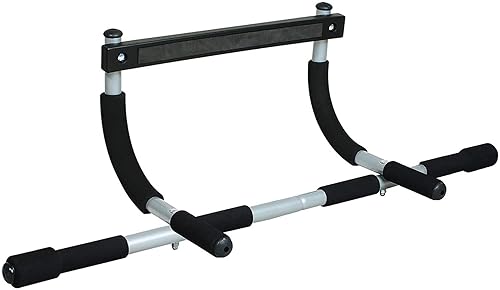
- Pull-ups or lat pulldowns: Build width through the lats. Pull-ups are harder; pulldowns let you control load precisely.
- Barbell or chest-supported row: Builds thickness in the mid-back. Chest support reduces lower back fatigue.
- Seated cable row: A controlled option for building the middle back with a steady tension profile.
- Straight-arm pulldown: Isolates the lats with minimal biceps involvement.
Accessory Pull Movements
- Face pulls: Train the rear delts and upper back. Pull the rope toward your forehead with elbows high.
- Reverse dumbbell flyes: Another effective rear delt movement with light weight and strict form.
- Barbell or EZ-bar curls: Heavy biceps work for the upper arm.
- Incline dumbbell curls: Stretch the biceps at the bottom for extra growth stimulus.
Leg Day Exercises
Leg day is often the most demanding session. Plan for a squat or hack squat pattern, a hip hinge, a unilateral movement, and calf work.
Primary Leg Movements
- Back squat: The main quad and glute builder. Hit depth you can control with a neutral spine.
- Romanian deadlift: Targets the hamstrings and glutes through the hip hinge. Keep the bar close and feel the stretch.
- Leg press: Allows heavy quad loading with less spinal demand than squats.
- Walking lunges or Bulgarian split squats: Unilateral work that corrects side-to-side imbalances.
Accessory Leg Movements
- Leg extensions: Isolate the quads, especially useful for the rectus femoris.
- Seated or lying leg curls: Direct hamstring work to complement the hinge pattern.
- Hip thrusts: Strong glute activation with minimal lower back strain.
- Standing or seated calf raises: Standing targets the gastrocnemius; seated emphasizes the soleus.
Setting Sets, Reps and Rest
A practical starting point for most lifters is 3 to 4 sets per exercise. Use 6 to 10 reps for primary compound lifts, 10 to 15 reps for accessories, and 12 to 20 reps for isolation and calves. Rest 2 to 3 minutes on heavy compounds and 60 to 90 seconds on isolation work.
| Exercise Type | Sets | Reps | Rest |
|---|---|---|---|
| Heavy compound (bench, squat, row) | 3–4 | 6–8 | 2–3 min |
| Secondary compound (incline press, RDL) | 3 | 8–12 | 90–120 sec |
| Accessory (lateral raise, curls) | 3 | 12–15 | 60–90 sec |
| Isolation or calves | 2–3 | 15–20 | 45–60 sec |
How to Progress Your Push Pull Legs Exercises
Progression means gradually doing more over time. Use a double progression model: pick a rep range, such as 8 to 12. When you hit the top of the range for all sets with good form, increase the weight by the smallest jump available (often 2.5 to 5 pounds) and drop back to the bottom of the range. Track every session in a notebook or app so you know what to beat next time.
A Simple Weekly Checklist
- Warm up with 2 to 3 light sets of your first exercise.
- Log the load, reps and reps in reserve for each set.
- Aim to finish most sets with 1 to 3 reps left in the tank.
- Add weight or reps when you hit the top of your range.
- Deload every 4 to 8 weeks if performance stalls or fatigue builds.
Common Mistakes
- Too much volume too soon. Beginners often add sets every week. Start with 10 to 12 hard sets per muscle group per week and build from there.
- Skipping warm-ups. Five minutes of light cardio and two ramp-up sets reduce injury risk.
- Ego lifting. Shortened range of motion and swinging the weight reduce muscle stimulus.
- Neglecting pull work. Many lifters press more than they pull, which can lead to rounded shoulders. Keep pulling volume equal to or greater than pressing.
- Ignoring recovery. Sleep, protein intake and rest days matter as much as the exercises themselves.
Tips for Better Results
- Keep the most demanding movement at the start of each session, when you are freshest.
- Use a full range of motion on every rep unless a joint limits you.
- Rotate accessory exercises every 6 to 8 weeks to keep growth going.
- Film one set of your main lifts from the side to check bar path and depth.
- If a joint hurts during an exercise, swap it for a variation rather than pushing through pain.
Recommended gear
A few basic tools make push pull legs training more comfortable and easier to track. Start with a lifting belt for heavy squats and deadlifts, since it can help you brace more firmly under load. A set of adjustable dumbbells saves space and lets you adjust weights quickly between incline and flat pressing. Resistance bands work well for warm-ups and face pulls when you do not have a cable machine nearby. Finally, a sturdy lifting strap helps you hold onto heavy rows and pulldowns without grip fatigue cutting sets short.
- Weightlifting belt: Supports your core during heavy squats and rows. View on Amazon
- Adjustable dumbbells: Cover a wide load range for pressing and rowing in a small footprint. View on Amazon
- Resistance bands: Useful for warm-ups, face pulls and band-assisted work. View on Amazon
- Lifting straps: Help you keep grip on heavy pulling sets. View on Amazon
FAQ
How many push pull legs exercises should I do per session?
Most people do 4 to 6 exercises per session: two or three primary compounds and two or three accessories. This is enough to hit each muscle group with meaningful volume without making the workout too long.
Can beginners use a push pull legs split?
Yes, though beginners often do better starting with a simpler full body plan for a few months. Once you can handle consistent training, push pull legs works well. Keep volume moderate and focus on learning form on the main lifts.
How often should I train each muscle group?
Running the split twice per week means each muscle group gets two sessions weekly, which research and common coaching practice support for muscle growth. A three-day rotation with one rest day between sessions is a common way to fit this in.
Should I train push, pull and legs on the same day?
No. The split works because each day targets a separate movement group, which lets you train each one hard. Combining them defeats the purpose and usually lowers the quality of your sets.
What if I have shoulder pain during pressing?
Try a neutral-grip dumbbell press, reduce the range of motion, or swap overhead pressing for landmine presses. Persistent pain should be checked by a doctor or physical therapist before you keep training through it.
How long should I stay on one set of exercises?
Most lifters keep the same main exercises for 6 to 12 weeks while progressing the load. Swap accessories more often if they stop challenging you or cause discomfort.
Do I need machines or free weights?
Neither is required. Free weights build more stabilizer strength, while machines let you push close to failure more safely. A mix of both is a practical approach for most people.
Conclusion
Push pull legs exercises are simple to organize: group pressing, pulling and leg movements into three sessions, choose a mix of compounds and accessories, and track your loads. Stick to a clear rep range, add weight when you hit the top of it, and manage recovery carefully. Consistent progression over months matters far more than any single workout. Consult a qualified coach or medical professional if you have an existing injury or health condition.
Related reading
- Women's Push Pull Legs 3-Day Split: A Step-by-Step Plan for Strength and Shape
- What's a Good Push Pull Legs Split? 7 Best Programs Compared (2026)
- What Does Push Pull Legs Mean? A Simple Guide to the Split
- Upper/Lower vs Push Pull Legs Reddit: Which Split Should You Choose?
- Upper/Lower Split vs Push/Pull/Legs (2026): Which Is Better for Your Training?
- Upper/Lower Split vs Push/Pull Legs Reddit: Which Should You Pick?
Ready to choose one?
About Colin Foster
Colin Foster is part of our editorial team and reviews and edits our workout programs & splits guides, checking product details against manufacturer specifications and owner feedback.