As an Amazon Associate I earn from qualifying purchases. This page may contain affiliate links.
A good beginner women’s workout plan does three things well: it teaches the basic movement patterns safely, it fits into a realistic weekly schedule, and it gives you a clear way to add weight or reps over time. Many beginners either jump into a program that is too advanced or pick something so vague that they never progress. The programs below are chosen to avoid both problems. Each one is selected for beginner friendliness, clarity of structure, required equipment, and how well it supports progression. Because this is a research-based selection drawn from manufacturer specifications, brand reputation and common owner feedback patterns, treat the picks as a shortlist to match against your own goals rather than a verdict on which one is objectively best.
Our Top Picks
Quick Comparison
| Product | Best for | Key feature |
|---|---|---|
| Nike Training Club app | Beginners who want guided video workouts | Large library of beginner-tagged sessions |
| Fitbod app | Lifters who want an auto-adjusting plan | Workouts generated from logged training history |
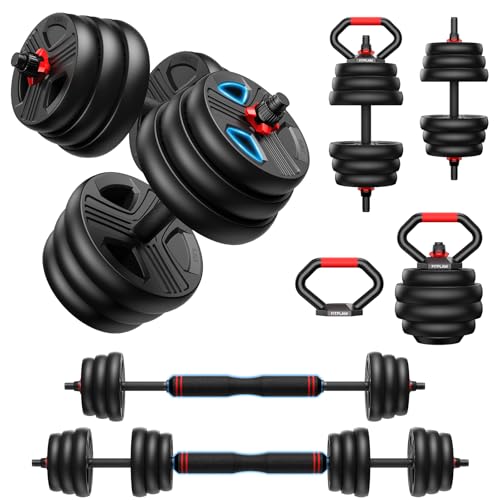
| Bowflex SelectTech 552 Adjustable Dumbbells | Home strength training with limited space | Quick weight adjustment from 5 to 52.5 lb per dumbbell |
| Resistance band set with door anchor | Home workouts and travel | Multiple resistance levels in one kit |
| Yoga mat with alignment lines | Floor work, mobility and core training | Non-slip surface and marked placement guides |
Nike Training Club app
This suits beginners who want a structured program with video instruction and no need to design their own weekly plan. It works well for women who prefer to follow along rather than read a written chart, and for anyone who wants to try different styles before committing to one.
Key specs
- Free download for iOS and Android, with an optional paid membership for additional content
- Workouts filterable by length, focus area and difficulty level
- Session lengths commonly listed in 10 to 45 minute ranges
- Requires little or no equipment for many sessions
Pros
- Clear demonstration videos for each movement
- Good variety, so boredom is less likely in the early weeks
- Easy to start on a phone without buying anything
Cons
- Sessions are not tailored to your progress, so you choose the level yourself
- Some of the most useful content sits behind the membership
Fitbod app
Fitbod is a fit for beginners who already have access to a gym or a decent set of dumbbells and want the program to adjust as they get stronger. It is less suited to someone who wants a simple, fixed routine with no data entry.
Key specs
- Generates workouts based on logged exercises, sets, reps and weights
- Works with gym equipment, dumbbells, kettlebells and bodyweight exercises
- Subscription-based app available on iOS and Android
- Tracks muscle recovery to suggest which areas to train next
Pros
- Progression happens automatically, which removes guesswork
- Useful exercise library with instructions for each movement
- Adapts when you miss sessions or change equipment
Cons
- Requires consistent logging to produce good recommendations
- Subscription cost is ongoing, which some beginners find less appealing
Bowflex SelectTech 552 Adjustable Dumbbells
These suit beginners who want to build strength at home and need one pair of weights that covers a wide range without a rack full of plates. They are a good match for a full-body dumbbell program, and they leave room to progress for a long time.
Key specs
- Adjustable from 5 to 52.5 lb per dumbbell, according to manufacturer specifications
- Weight changed by turning a dial and selecting the desired load
- Sold as a pair, with a compact footprint compared with standard plate sets
- Designed for exercises such as squats, rows, presses and lunges
Pros
- Covers light weights for learning form and heavier loads for progression
- Saves significant floor space compared with a fixed dumbbell collection
- Quick weight changes keep supersets and circuits moving
Cons
- Higher upfront investment than basic fixed dumbbells
- Some owners report that the selector mechanism needs care to avoid misalignment
Resistance band set with door anchor
This is the right choice for beginners who want low-impact strength work at home, on vacation or in a small apartment. It is especially useful for glute, hip and upper-back exercises that are easy to start with a band.
Key specs
- Typically sold in multiple resistance levels, often light to heavy
- Includes handles, ankle straps or a door anchor in most kits
- Latex or fabric construction, depending on the product
- Stretches to several times its resting length, with resistance rising through the range
Pros
- Very portable and easy to store
- Good for glute bridges, banded rows, lateral walks and shoulder work
- Resistance can be increased by switching bands or shortening the grip
Cons
- Harder to progress precisely compared with loaded weights
- Bands wear over time, and owners often recommend checking for nicks or thinning
Yoga mat with alignment lines
A mat is a simple but useful purchase for a beginner plan that includes floor work, core exercises, stretching and mobility. It suits women who train at home or in a studio and want a stable surface for planks, glute bridges and recovery sessions.
Key specs
- Common thickness range of about 4 to 6 mm for general training
- Non-slip surface, often textured rubber or PVC
- Printed alignment lines or placement guides on many models
- Typical length of around 68 inches, with extra-long options available
Pros
- Provides cushioning for knees and wrists during floor exercises
- Alignment markings help beginners keep hands and feet placed consistently
- Lightweight and easy to roll up for storage
Cons
- Thin mats offer limited cushioning for heavier or longer floor sessions
- Textured surfaces can attract dust and need periodic cleaning
Buying Guide
Choosing a beginner women’s workout plan is less about finding a single perfect product and more about matching the plan to your schedule, space, experience and goals. The criteria below will help you narrow the field before you spend money on anything.
Selection criteria
- Beginner suitability: Does the plan teach foundational movements like squats, hinges, presses, rows and planks with clear progressions?
- Structure: Does it tell you how many days to train, what to do on each day, and how many sets and reps to perform?
- Progression: Is there a built-in way to increase difficulty, whether through added load, more reps, harder variations or longer time under tension?
- Equipment needs: Can you start with what you already have, or does the plan require gym access or a specific purchase?
- Time commitment: Are sessions realistic for your week? Many beginners do well with three sessions of 30 to 45 minutes.
Important features
Look for programs that include a warm-up, two to four main exercises per session, and a cooldown or mobility component. Full-body routines are usually the most efficient starting point because they train each major muscle group more than once per week. Clear instructions for form, tempo and rest intervals are also valuable, especially in the first four to six weeks.
Specs to check
- Session length and number of sessions per week
- Recommended sets, reps and rest periods (a typical beginner range is 2 to 3 sets of 8 to 15 reps, with 60 to 90 seconds of rest)
- Weight range for adjustable equipment, and the smallest increment available for slow, consistent progress
- Resistance levels for bands, and whether they can be combined
- Mat thickness, grip surface and dimensions for floor-based work
Choosing by need
- If you want a plan with no decisions to make: A guided video app with beginner-level sessions is a practical start.
- If you want automatic progression: A data-driven app works best, provided you are willing to log your training consistently.
- If you train at home with limited space: Adjustable dumbbells and a band set cover most strength needs.
- If you travel often: Bands and a lightweight mat are easy to pack.
- If you focus on mobility and core: A quality mat becomes the most important piece of equipment.
Things to watch out for
- Plans that promise fast results in unrealistic timeframes
- Routines that jump straight to advanced movements such as heavy barbell lifts or high-rep plyometrics without teaching form first
- Programs that ignore rest days, which are essential for recovery
- Equipment that is too light to challenge you after about four weeks
- Any plan that causes sharp joint pain. Pain is a signal to modify the exercise, not push through it.
If you have a medical condition, are pregnant, or are returning from injury, consult a physician or a qualified physical therapist before starting a new program.
For a broader framework on building your own schedule, see How to Create a Workout Plan: A Step-by-Step Guide for Beginners and Full Body Workout Routine: A Step-by-Step Plan for Beginners. If you prefer a dumbbell-focused approach, Full Body Dumbbell Workout: A Step-by-Step Plan for Beginners pairs well with the adjustable set above. For a no-equipment option, Home Workout Routines Without Equipment: A Step-by-Step Plan and 30 Minute Home Workout Routine No Equipment: A Full-Body Plan offer strong starting points.
FAQ
How many days per week should a beginner train?
Most beginners do well with three full-body sessions per week, with at least one rest day between them. Two sessions can work for people with very limited time, and four is reasonable once the basics feel comfortable.
How long should each session last?
Thirty to 45 minutes is enough for most beginner programs. Shorter sessions done consistently usually produce better results than long sessions that are skipped.
Do I need a gym to start?
No. Bodyweight exercises, a resistance band set and a pair of adjustable dumbbells cover the major movement patterns. A gym becomes useful when you want heavier loads or a wider range of machines.
How do I know when to increase the weight?
A common approach is to add load when you can complete all prescribed sets and reps with good form and at least one or two reps still in reserve. If you cannot complete the target reps for two sessions in a row, reduce the load slightly.
Is soreness a sign that the workout worked?
Mild soreness is common in the first few weeks, especially after a new exercise. It is not a reliable measure of effectiveness. Sharp pain, joint pain or soreness that lasts several days is a reason to scale back and speak with a healthcare professional.
Should I combine strength training with cardio?
Many beginners benefit from adding 10 to 20 minutes of walking or light cardio on non-lifting days. The right balance depends on your goals, so a qualified trainer or physician can help you adjust it.
How long should I follow one program before switching?
Four to eight weeks is a sensible block for most beginners. This gives enough time to see progress and learn the movements before changing the stimulus.
Conclusion
For beginners who want guidance without designing a plan, the Nike Training Club app offers the simplest entry point. Those who train with weights at home and want progression built in will find the Fitbod app and the Bowflex SelectTech 552 Adjustable Dumbbells a strong combination. A resistance band set suits people with limited space or frequent travel, and a yoga mat with alignment lines is a practical foundation for anyone who plans to do regular floor work. Start with the option that fits your space and schedule, follow it consistently for at least four weeks, and adjust based on how your body responds. Consistency and sensible progression matter far more than any single product.