As an Amazon Associate I earn from qualifying purchases. This page may contain affiliate links.
A women’s beginner workout routine works best when it gives you a clear plan, a set order of exercises, and a simple way to add weight or reps over time. If you are new to strength training, the hardest part is often not the workout itself but knowing what to do on which day. This guide compares three products that address that problem in different ways, so you can match one to your goals, schedule, and training space.
Our selection looked at how well each option explains exercise selection, how clearly it lays out sets and reps, whether it includes form guidance, how realistic the time commitment is for someone just starting, and what owners commonly report about usability. We did not test these products ourselves. The comparison is based on listing details, product specifications, brand reputation, and patterns in owner feedback. Consult a doctor or qualified professional before starting any new exercise program, especially if you have a health condition, joint problems, or are returning after a long break.
Our Top Picks
Quick Comparison
| Product | Best for | Key feature |
|---|---|---|
| Full Body Workout Routines for Women | Beginners who want a complete written plan | Full-body routines designed to remove guesswork |
| Laminated 11×17 Home Gym Routine Posters | Home lifters who want a visual reference | Printed charts with a QR code linking to video |
| Military Calisthenics Workout for Women Over 50 | Beginners who prefer bodyweight training at home | 28-day program built from 15-minute sessions |
Full Body Workout Routines for Women: Take the guess work out of your workout routine to build strength

Full Body Workout Routines for Women: Take the guess work out of your workout routine to build strength
This option suits women who want a structured, written plan that covers the whole body in each session. It is a strong fit for someone who knows they should train but feels unsure which exercises to choose or how many sets to perform.
Key specs
- Format: printed book-style guide
- Focus: full-body strength routines for women
- Purpose: removes the need to design your own workouts
Pros
- Gives a complete routine so you do not have to build your own plan
- Full-body structure works well for beginners training two or three days per week
- Focuses on strength, which supports everyday movement and later progression
Cons
- Written programs require you to track your own progress and loads
- Equipment needs depend on the routines, so you may need dumbbells or a gym
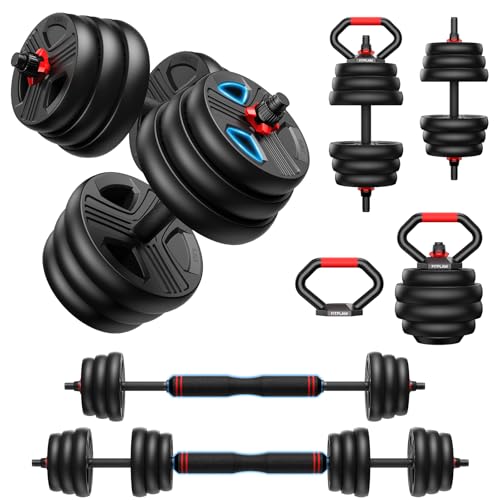
Laminated 11×17, Build a Clear Home Gym Routine, Weight Lifting with QR Code Video, Free Weight Body Building Guide Dumbbell Workout Posters, Exercise Charts & Video Guide

Laminated 11×17, Build a Clear Home Gym Routine, Weight Lifting with QR Code Video, Free Weight Body Building Guide Dumbbell Workout Posters, Exercise Charts & Video Guide
This option is best for women who train at home with free weights and prefer to see a movement laid out visually. Posted on a wall or kept on a shelf, the charts act as a reference you can check mid-session.
Key specs
- Size: 11×17 inches
- Finish: laminated, which helps resist wear from sweat and chalk
- Includes a QR code that links to video demonstrations
Pros
- Visual charts make it easier to recall exercise setup and movement
- QR code video links let you check form without searching online
- Laminated surface is practical for a training area that gets sweaty
Cons
- Posters work best alongside a dumbbell set, so they are less useful without equipment
- Video links depend on the publisher keeping them active over time
Military Calisthenics Workout for Women Over 50: A Complete 28-Day Beginner Workout Program with 15-Minute Routines to Improve Mobility, Build Strength, Boost Balance & Feel Athletic Again

Military Calisthenics Workout for Women Over 50: A Complete 28-Day Beginner Workout Program with 15-Minute Routines to Improve Mobility, Build Strength, Boost Balance & Feel Athletic Again
This program suits women who want to start strength work with bodyweight movements and short sessions. Its 15-minute format fits busy schedules, and the focus on balance and mobility can be a sensible starting point for those returning to exercise.
Key specs
- Duration: 28-day beginner program
- Session length: 15 minutes per routine
- Focus: mobility, strength, and balance using calisthenics
Pros
- Short sessions make consistency easier for people with limited time
- Bodyweight focus means little or no equipment is required
- Progressive four-week structure gives a clear sense of what comes next
Cons
- Bodyweight work may feel too light for those who want heavier loading later
- Some owners may find the 28-day timeline shorter than they want for long-term progress
Buying Guide
Choosing a women’s beginner workout routine is less about finding the most advanced program and more about finding one you will actually follow. Start by deciding how many days per week you can train, where you will train, and what equipment you already have. A plan that asks for four days in a gym will not help someone who can manage two sessions at home.
Selection criteria
- Clarity: Each session should name exercises, sets, reps, and rest periods.
- Progression: The plan should explain how to increase difficulty over weeks.
- Form guidance: Look for written cues, diagrams, or video links.
- Time commitment: Pick a session length you can repeat consistently.
- Equipment needs: Match the plan to dumbbells, bands, machines, or bodyweight only.
Important features
Full-body routines are usually the most practical starting point for beginners because they train major muscle groups two or three times per week. Built-in progression matters just as much. Without a method for adding load, reps, or difficulty, most beginners plateau quickly or stop training altogether. Visual references and video demonstrations help with setup, especially for squats, hinges, presses, and rows.
Specs to check
- Number of training days per week (two to three is typical for beginners)
- Session length (30 to 45 minutes works for most people)
- Whether the plan lists specific weights, bodyweight variations, or effort guidelines
- Whether rest days are built in between sessions
Choosing by need
- Want a complete written plan: Choose a full-body routine guide.
- Train at home with weights: Choose visual charts with video support.
- Short on time or new to exercise: Choose a short-session bodyweight program.
If you are building your own plan from scratch, our guide on How to Create a Workout Plan: A Step-by-Step Guide for Beginners walks through the same decisions in detail. For a home-only approach, see Home Workout Routines Without Equipment: A Step-by-Step Plan.
Things to watch out for
- Plans that promise fast results with very high frequency, which often leads to soreness and dropout
- Programs with no warm-up or rest guidance
- Routines that skip progression entirely, so you repeat the same weights for months
- Any program that asks for maximal lifts in the first week
For a warm-up before your first sessions, read Warm-Up Routines Before Strength or Cardio. Anyone with a medical condition, injury, pregnancy, or blood pressure concern should speak with a doctor before starting.
FAQ
How many days a week should a beginner woman train?
Most beginners do well with two or three full-body sessions per week, with at least one rest day between them. This gives your muscles time to recover while still providing enough stimulus to improve.
How long should each workout last?
Sessions of 30 to 45 minutes are typical for beginners. Shorter routines can work well if they are consistent, and the best length is the one you can repeat every week.
Do I need a gym to start?
No. Bodyweight exercises like squats, push-ups on an incline, glute bridges, and rows with a resistance band can build strength at home. Adding adjustable dumbbells later makes progression easier.
How do I know when to increase the weight?
A common approach is to add weight or reps once you can complete all planned sets with good form and some reps left in reserve. If you cannot maintain form, stay at the current load.
Is it normal to feel sore after the first few sessions?
Some soreness, especially in the legs and back, is common when starting. It usually fades within a few days as your body adapts. Sharp pain, joint pain, or soreness that lasts well beyond a few days is a reason to pause and consult a professional.
How long before I notice results?
Many beginners notice improved energy and easier everyday movement within a few weeks. Visible changes in strength and muscle usually take several months of consistent training and good recovery.
Should I train before or after cardio?
For strength goals, many coaches suggest lifting first, then adding cardio. If your main goal is endurance, the order may change. Our article on Walking Workouts: Pace, Intervals and Weekly Targets covers a simple cardio option to pair with strength work.
Can I combine this routine with a weekly schedule?
Yes. Once you choose a routine, plan your training days on a calendar before the week starts. Our guide to Weekly Workout Schedules That Fit the Guidelines shows how to place sessions around work and rest.
Conclusion
A women’s beginner workout routine should give you a clear structure, realistic session lengths, and a method for progression. The full-body routine guide is the best match for someone who wants a complete written plan and does not mind tracking their own loads. The laminated home gym charts suit women who train with dumbbells at home and want visual and video support. The 28-day bodyweight program is a practical choice for those with limited time or little equipment who want to start with short, approachable sessions.
Whichever option you choose, commit to a consistent schedule for four to six weeks before judging the results. If you have any health concerns, check with a doctor or qualified trainer before beginning. For more starting points, browse Women's Beginner Gym Workout Plan: 8 Best Programs for New Lifters (2026) and Beginner Workouts: How to Start and Progress Safely.