As an Amazon Associate I earn from qualifying purchases. This page may contain affiliate links.
Must see fitness workout routines are the programs that people keep coming back to because they actually produce results: a clear structure, sensible progression, and a weekly schedule that fits real life. In this guide you will learn how to choose a routine that matches your goals, how to read sets, reps and rest prescriptions, how to progress week to week, and how to build a simple training week you can follow for months. You will also get a few complete plans you can print and use right away.
Step 1: Define the Goal Your Routine Must Serve
Every effective routine starts with a single, measurable goal. “Get fitter” is too vague to design around. “Add 20 pounds to my squat in 12 weeks” or “complete 30 push-ups in a set by spring” gives you a target that dictates exercise selection, rep ranges and how often you train. For a deeper look at setting targets you can track, see Setting Realistic Fitness Goals and Measuring Progress.
- Strength: 3–6 reps per set on main lifts, 2–4 minutes of rest.
- Muscle size (hypertrophy): 6–12 reps per set, 60–120 seconds of rest.
- General fitness and endurance: 10–20 reps or timed intervals, 30–90 seconds of rest.
Step 2: Choose a Training Split That Fits Your Week
A split is how you divide your muscle groups across training days. Three common options cover most people well.
Full-Body Routines
Train all major muscle groups in each session, usually two or three times per week. This suits beginners and people with limited time, because each muscle gets frequent practice. A beginner-friendly version is outlined in Full Body Workout Routine: A Step-by-Step Plan for Beginners.
Upper/Lower Splits
Alternate upper-body and lower-body days across four sessions per week. This gives each area two focused sessions and works well for intermediate lifters who want more volume without six days in the gym.
Push/Pull/Legs
Divide training into pressing muscles, pulling muscles and legs. Running the cycle twice over six days is a popular structure for experienced trainees. A full program is detailed in Push Pull Legs Workout Plan: 6-Day Split With Sets and Reps.
| Split | Days per Week | Best For | Session Length |
|---|---|---|---|
| Full body | 2–3 | Beginners, busy schedules | 45–60 min |
| Upper/lower | 4 | Intermediate lifters | 50–70 min |
| Push/pull/legs | 3–6 | Advanced lifters, muscle growth | 60–90 min |
Step 3: Build Each Session Around Compound Lifts
Compound movements work several joints and muscle groups at once, so they deliver the most training effect per minute. Build each session around them, then add isolation work for finishing.
- Warm up for 5–10 minutes. A short routine like the one in Warm-Up Routines Before Strength or Cardio is enough.
- Start with one primary compound lift: squat, deadlift, bench press, overhead press or row.
- Add one or two secondary compounds, such as a lunge, incline press or pull-up variation.
- Finish with 2–3 isolation exercises for arms, shoulders, calves or core.
Step 4: Apply Progressive Overload Week by Week
Progressive overload means gradually asking more of your muscles. Without it, a routine stops working after a few weeks. There are four main levers you can pull:
- Add weight, typically 2–5 percent when you hit the top of your rep range for all sets.
- Add a rep to each set until you reach the top of the range, then add weight and drop back down.
- Add a set to the main exercise once the current volume feels manageable.
- Shorten rest periods slightly, or improve movement quality and range of motion.
A simple rule is to aim for one to three reps “in reserve,” meaning you could have done that many more with good form. Stopping closer to failure is useful on final sets but risky on heavy lifts, so keep technique the priority.
Step 5: Plan Recovery and Deloads
Muscles grow during recovery, not during the workout. Sleep 7–9 hours, eat enough protein (roughly 0.7–1 gram per pound of body weight is a common target for lifters), and take at least one full rest day per week. Every 4–8 weeks, consider a deload: cut your working weights by about 40 percent or your sets in half for one week. This lets fatigue clear so you can push harder afterward.
Sample Full-Body Plan You Can Print
Perform this three days per week (for example Monday, Wednesday, Friday). Rest 2–3 minutes after compound lifts and 60 seconds after accessories.
| Exercise | Sets | Reps | Notes |
|---|---|---|---|
| Goblet squat or back squat | 3 | 6–10 | Add weight when you hit 10 reps on all sets |
| Dumbbell bench press | 3 | 8–12 | Control the lowering phase |
| One-arm dumbbell row | 3 | 8–12 each side | Pause briefly at the top |
| Romanian deadlift | 3 | 8–10 | Keep a slight knee bend |
| Overhead press | 2 | 8–10 | Brace the core |
| Plank | 3 | 30–45 sec | Keep hips level |
Sample Home Routine Option
If you train without a gym, bodyweight progressions work well. Choose a variation that is challenging but lets you finish most sets with good form. Pair this with the ideas in Home Workout Routines Without Equipment: A Step-by-Step Plan and 30 Minute Home Workout Routine No Equipment: A Full-Body Plan.
- Push-up variation: 3 × 8–15
- Split squat: 3 × 8–12 per leg
- Glute bridge: 3 × 12–20
- Inverted or towel row: 3 × 6–12
- Dead bug: 3 × 8 per side
Common Mistakes
- Changing programs every two weeks. Give a routine at least 6–8 weeks before judging it.
- Skipping logs. If you do not record weights and reps, you cannot apply progressive overload.
- Ignoring warm-ups, then loading heavy lifts too quickly.
- Training to failure on every set, which slows recovery and raises injury risk.
- Copying an advanced split before your body and schedule can handle the volume.
Tips for Sticking With It
- Schedule sessions like appointments and keep the same training days when possible.
- Pick a routine you can complete on your worst day, then add intensity on good days.
- Track progress with photos, measurements or performance numbers, not just the scale.
- If you are new to lifting, a short introduction such as Beginner Workouts: How to Start and Progress Safely helps you build the habit first.
Recommended gear
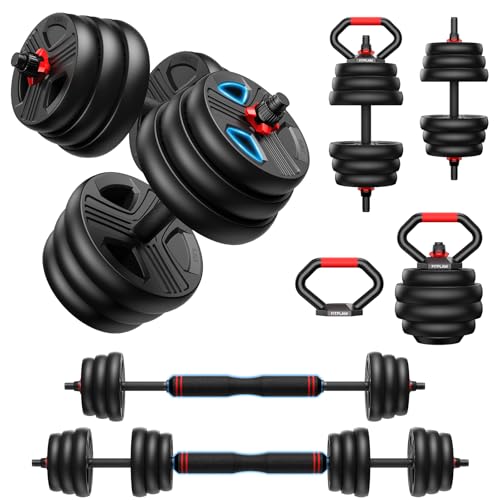
Adjustable dumbbells let you follow most of the plans above without filling a room with weights. Look for a set that covers the weight range you need for presses and rows.
View on AmazonA sturdy resistance band set adds load to home workouts and helps with warm-ups and assisted exercises. For sizing and comparisons, see Best Resistance Bands for Home Workouts: 5 Sets Compared.
View on AmazonA lifting belt can support heavy compound sets once you are working near your limits, though it should not replace bracing technique.
View on AmazonA kettlebell is useful for swings, carries and goblet squats, which fit well into full-body days. If you want to add one, compare options in Best Kettlebells for Home Workouts: 4 Kettlebells Compared.
View on AmazonFAQ
How many days per week should I follow a routine?
Most beginners do well with three full-body sessions per week. Intermediate lifters often move to four days with an upper/lower split, while advanced trainees may use five or six days.
How long should I stay on one routine?
Plan on 6–12 weeks for a block, then adjust exercises or rep ranges. Switching too often makes it hard to measure progress.
Are must see fitness workout routines suitable for beginners?
Many are, but choose a program with simple movements, lighter loads and a clear progression. Full-body plans are usually the most forgiving starting point.
How much rest should I take between sets?
Two to three minutes for heavy compound lifts, 60–90 seconds for moderate reps and 30–60 seconds for accessory or conditioning work.
Do I need to train to failure?
No. Stopping one to three reps short of failure builds muscle and strength effectively for most people and reduces fatigue and injury risk.
What if I miss several workouts?
Resume at about 90 percent of the last weights you used, then build back up over a week or two. Consistency matters more than any single session.
Should I see a professional before starting?
If you have a heart condition, joint injury, high blood pressure or other health concern, consult a doctor or qualified exercise professional before beginning a new program.
Conclusion
The best routine is the one that matches your goal, fits your schedule and gives you a clear way to progress. Pick a split, build sessions around compound lifts, track your numbers and apply progressive overload for at least six to eight weeks. Use the printable plans above as a starting point, then adjust as your strength and experience grow.