By Emily Parker
Updated November 2026
If you are asking should I do push pull legs or bro split, the short answer is this: push pull legs (PPL) wins for most intermediate lifters who can train five or six days a week and want each muscle hit two times weekly. A bro split wins for people who have only three or four days, prefer one muscle group per session, or find that long, focused workouts keep them motivated. Both can build muscle. The real question is which schedule you will actually follow consistently.
Push Pull Legs vs Bro Split at a Glance
Before comparing the details, here is how the two splits line up on the criteria that matter most for a typical lifter training in a commercial gym.
| Criterion | Push Pull Legs | Bro Split |
|---|---|---|
| Typical training days per week | 3 to 6 | 4 to 6 |
| Training frequency per muscle | About 2 times per week | About 1 time per week |
| Session length | 45 to 75 minutes | 50 to 90 minutes |
| Muscles per session | Several related muscle groups | One or two muscle groups |
| Best for | Strength and balanced growth | Bodybuilding-style volume and pump |
| Recovery demand per session | Moderate, spread across the week | High for the targeted muscle |
| Scheduling flexibility | Easy to shift days around | Missing a day leaves a gap |
| Beginner friendliness | Good, if you learn the movements | Fair; easier to program poorly |
Training Frequency: Which Split Wins?
Push pull legs wins on frequency. Because each muscle group appears in one of the three templates, a six-day PPL schedule trains chest, shoulders, back, quads and hamstrings about twice per week. A standard bro split usually trains each muscle once per week. Research on resistance training generally suggests that hitting a muscle at least twice weekly, with total weekly volume spread across sessions, tends to produce more growth per unit of volume than concentrating everything into a single session. That is the main reason many coaches recommend PPL when your schedule allows it.
That said, a bro split can still work well if you distribute sets carefully. Even with once-weekly training, you can build muscle if each session includes enough quality sets, typically 10 to 20 hard sets per muscle per week, split across two or three exercises.
Winner: Push Pull Legs.
Muscle Growth and Volume: Which Split Builds More Muscle?
Total weekly volume matters more than the split name. A lifter doing 16 hard sets for chest per week will generally grow comparably whether those sets come in one session or spread across two. Where PPL pulls ahead is that it makes higher weekly volume easier to recover from, because you are not stacking 20 sets of chest into one day. Where a bro split holds its own is for lifters who enjoy high-volume single-muscle sessions and can keep their volume consistent.
A practical example: a bro split day for chest might include flat barbell bench press for 4 sets of 6 to 8 reps, incline dumbbell press for 3 sets of 8 to 12, cable flyes for 3 sets of 12 to 15, and a dip or pushup finisher. That is roughly 11 hard sets in one day. A PPL push day might cover the same chest work plus shoulder presses and triceps, spreading the chest load across two push sessions per week.
Winner: Push Pull Legs for most intermediate lifters, with the caveat that a bro split can match it if weekly volume is equal.
Recovery and Fatigue Management
Recovery is where many lifters decide between these splits. In a bro split, one day may be brutally hard for a single muscle, and you may not feel ready to repeat that intensity for another six or seven days. In PPL, fatigue is shared: a push day loads chest and shoulders, a pull day loads back and biceps, and a leg day loads the lower body. Each session is less punishing on any one system, and you rarely walk into a session with a fully fatigued muscle group.
Bro splits also tend to leave stronger muscles sore for longer. If you have a history of poor sleep, high work stress or joint irritation, PPL’s distributed load is usually easier to manage. Anyone with a current injury, a medical condition or doubts about training load should check with a doctor or physical therapist before choosing a schedule.
Winner: Push Pull Legs for most people, especially those under heavy stress or recovering from high-volume blocks.
Time Commitment and Scheduling
This is where a bro split has a real advantage for some people. If you can only train three or four days per week, a bro split built around chest/back, legs, shoulders/arms, and a fourth optional day is easy to run. Push pull legs at three days means one full session per template, which works, but you will train each muscle only once per week, which removes much of PPL’s frequency advantage. The three-day version is still useful, though. For a concrete starting template, see Push/Pull Legs 3 Day Split: A Step-by-Step Guide to Building Strength.
A six-day PPL schedule, run as push, pull, legs, push, pull, legs, gives each muscle two sessions per week. For a full template with sets and reps, see Push Pull Legs Workout Plan: 6-Day Split With Sets and Reps. If you want a clear explanation of the structure before committing, What Does Push Pull Legs Mean? A Simple Guide to the Split covers the basics.
Session length also differs. A bro split day with two or three exercises for one muscle group often runs 50 to 90 minutes. PPL sessions usually land between 45 and 75 minutes because the volume per muscle is lower.
Winner: Bro Split if your schedule caps you at three or four days. Push Pull Legs if you have five or six days available.
Beginner Friendliness and Ease of Programming
For beginners, PPL tends to be the better starting point because it teaches movement patterns in a logical way: pressing, pulling and squatting or hinging. It also forces a full-body balance that prevents the common mistake of overtraining chest while neglecting back. Beginners who try a bro split often spend too much time on favorite muscles and skip the rest. If you are new, Push Pull Legs Workout Split for Beginners: A Step-by-Step Guide walks through how to start without overloading yourself.
Bro splits are not off-limits for beginners, but they require more discipline to program. Without a plan that covers all major muscles across the week, you can end up with a lopsided physique.
Winner: Push Pull Legs, mainly because it is harder to make a serious balance mistake.
Which Should You Choose?
Use this checklist to match the split to your situation:
- Choose push pull legs if you can train five or six days per week and want each muscle trained twice weekly.
- Choose push pull legs if you are an intermediate lifter prioritizing strength and balanced development.
- Choose push pull legs if your recovery is limited by work stress, poor sleep or a busy life outside the gym.
- Choose a bro split if you can only train three or four days and still want high volume per muscle.
- Choose a bro split if you enjoy long, focused sessions on one muscle group and stay motivated that way.
- Choose a bro split if you are an experienced lifter who already knows how to balance volume across the week.
- Choose either if you can commit to 10 to 20 hard sets per muscle per week and track your progress.
If you want a middle path, a hybrid such as Push Pull Legs/Full Body Hybrid: A Step-by-Step Guide to Building Your Split gives you frequency for major muscles while keeping sessions manageable.
Gear for Either Split
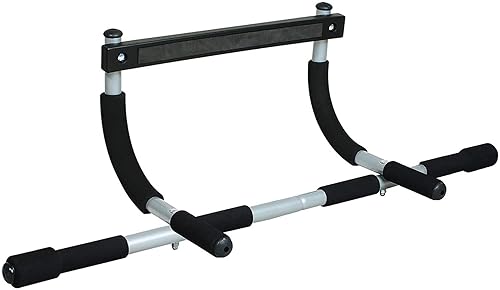
Neither split requires special equipment, but a few tools make both easier to run. For push days and bro-split chest and shoulder sessions, a sturdy adjustable bench is useful. Pull days benefit from a lat pulldown or pull-up station, and leg days rely on a squat rack and a set of loading plates.
For push pull legs:
For a bro split:
Consider both options only as equipment choices. The split itself depends on your schedule and recovery, not the bench.
FAQ
Is push pull legs better than a bro split for building muscle?
For most intermediate lifters training five or six days per week, push pull legs usually produces slightly better results because each muscle is trained twice weekly. However, if total weekly volume is equal, a bro split can build muscle just as well.
Can I do push pull legs three days a week?
Yes. A three-day PPL routine trains each muscle once per week, which is closer to a bro split in frequency. It is a good option for beginners or people with limited time, but it gives up some of PPL’s frequency advantage.
Is a bro split good for beginners?
It can work, but beginners generally do better with push pull legs or a full-body approach. A bro split requires careful planning to avoid neglecting smaller muscle groups.
How many sets per muscle should I do each week?
Many lifters progress well with roughly 10 to 20 hard sets per muscle per week, adjusted for recovery and experience. Start toward the lower end and add sets gradually as you adapt.
Should I see a professional before starting a new split?
If you have an injury, a heart condition, joint problems or another health concern, consult a doctor or physical therapist before changing your training load. They can help you choose a split that fits your needs.
Conclusion
So, should I do push pull legs or bro split? For most people with five or six training days, push pull legs is the stronger choice because it trains each muscle twice a week and spreads fatigue more evenly. A bro split makes sense for lifters limited to three or four days, or for those who prefer high-volume single-muscle sessions and already know how to balance their program. Pick the split you can recover from and stick to for at least eight to twelve weeks, then adjust based on your progress.
About Emily Parker
Emily Parker is part of our editorial team and reviews and edits our workout programs & splits guides, checking product details against manufacturer specifications and owner feedback.