 By Emily Parker
Updated November 2026
A 3 day push pull legs routine lets you train every major muscle group twice a week while keeping each session focused and manageable. In this guide you will get a complete weekly plan with exercises, sets, rep ranges, rest periods, and a progression method so you know exactly when to add weight. The split works for beginners and intermediate lifters alike, as long as you can commit to three training days and recover well between them.
What a 3 Day Push Pull Legs Routine Actually Is
Push pull legs is a training split that sorts exercises by movement pattern rather than by body part. Push days cover movements where you press weight away from your body, which mainly works the chest, shoulders, and triceps. Pull days cover movements where you draw weight toward you, targeting the back, rear shoulders, and biceps. Leg days work the quads, hamstrings, glutes, and calves.
Shopping for one? See our guide: 3 Best Push/pull Legs 3 Days a Week Routines (2026): Our Picks.
In a 3 day version, you complete one push session, one pull session, and one leg session, then rest or repeat the cycle. Most people run it as Push, Pull, Legs on Monday, Wednesday, and Friday, with the weekend off. Some lifters rotate the order each week, starting with Pull or Legs, so no single session always falls right after a rest day. That small change can help if one workout tends to feel harder than the others.
Because each muscle group gets trained about twice per week, you spread your total volume across more sessions. That makes each workout shorter and less fatiguing than a traditional bro split where you hit chest once and do nothing else for it.
Who This Routine Is Best For
This split suits people who have three reliable days a week and want more frequency than a basic full body plan without the commitment of six days. It is a strong fit for:
- Beginners who have a few months of consistent lifting behind them and want a structured plan.
- Intermediate lifters who recover well and want to train each muscle twice weekly.
- People building muscle who prefer shorter sessions of 45 to 60 minutes.
- Anyone whose schedule rules out four or more training days.
If you are brand new to lifting, spend the first two to four weeks learning the main movements with lighter loads before pushing hard on the sets listed below. If you have a shoulder, back, or knee condition, or any history of injury, check with a physical therapist or doctor before starting, and substitute movements that feel safe for you.
Step 1: Set Up Your Week
Before you touch a weight, decide on your schedule. The goal is at least one rest day between each training day, and ideally a full rest day after the third session.
| Day | Session | Primary Focus |
|---|---|---|
| Monday | Push | Chest, shoulders, triceps |
| Tuesday | Rest | Recovery, light walking |
| Wednesday | Pull | Back, rear delts, biceps |
| Thursday | Rest | Recovery |
| Friday | Legs | Quads, hamstrings, glutes, calves |
| Saturday–Sunday | Rest | Full recovery |
Some people find that Wednesday’s pull session falls too close to Monday’s push session in terms of shoulder fatigue. If that happens to you, you can swap the days so that the pull session comes first.
Step 2: Build Your Push Day
Push day trains the front and side of the shoulders, the chest, and the triceps. Start with your heaviest compound lift and finish with isolation work.
Push Day Workout
- Barbell or dumbbell bench press: 4 sets of 6 to 8 reps, rest 2 to 3 minutes.
- Seated dumbbell shoulder press: 3 sets of 8 to 10 reps, rest 90 seconds.
- Incline dumbbell press: 3 sets of 8 to 12 reps, rest 90 seconds.
- Cable or dumbbell lateral raise: 3 sets of 12 to 15 reps, rest 60 seconds.
- Triceps pushdown: 3 sets of 10 to 12 reps, rest 60 seconds.
- Overhead triceps extension: 2 sets of 12 to 15 reps, rest 60 seconds.
Choose a weight for each set that leaves you one to two reps short of failure on the last set. If you hit the top of the rep range easily, increase the load on the next session.
Step 3: Build Your Pull Day
Pull day covers the lats, mid-back, rear delts, and biceps. Pulling movements matter for posture and for balancing the pressing work you did on push day.
Pull Day Workout
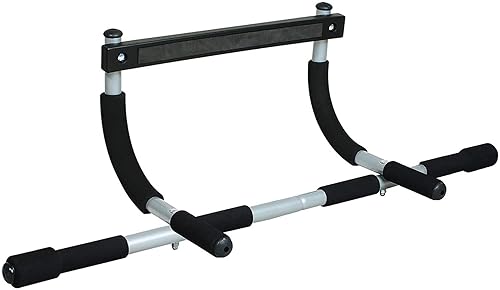
- Pull-ups or lat pulldowns: 4 sets of 6 to 10 reps. Use assisted pull-ups or a band if needed.
- Barbell or chest-supported dumbbell row: 3 sets of 8 to 10 reps, rest 90 seconds.
- Seated cable row: 3 sets of 10 to 12 reps, rest 90 seconds.
- Face pull: 3 sets of 12 to 15 reps, rest 60 seconds.
- Incline or standing dumbbell curl: 3 sets of 10 to 12 reps, rest 60 seconds.
- Hammer curl: 2 sets of 10 to 12 reps, rest 60 seconds.
Keep your torso stable during rows. If you feel your lower back doing most of the work, reduce the weight and focus on pulling with your elbows and upper back.
Step 4: Build Your Leg Day
Leg day should be the session you plan carefully, because it is the most demanding. Start with a squat or hip-dominant movement while you are fresh, then move to accessory work.
Leg Day Workout
- Back squat or goblet squat: 4 sets of 6 to 8 reps, rest 2 to 3 minutes.
- Romanian deadlift: 3 sets of 8 to 10 reps, rest 2 minutes.
- Leg press: 3 sets of 10 to 12 reps, rest 90 seconds.
- Lying or seated leg curl: 3 sets of 10 to 12 reps, rest 60 seconds.
- Walking lunge or Bulgarian split squat: 2 sets of 10 reps per leg, rest 90 seconds.
- Standing or seated calf raise: 3 sets of 12 to 15 reps, rest 60 seconds.
Leg days are where many lifters cut corners. Keep your reps controlled, go deep on squats within a range that your hips and knees tolerate, and do not skip the hamstring work.
Step 5: Use a Simple Progression Method
A routine only works if you make it harder over time. The most reliable approach for this split is double progression.
- Pick a rep range for each exercise, such as 8 to 12 reps.
- Use a weight that lets you reach the bottom of the range on all sets with good form.
- Once you hit the top of the range on every set, increase the weight by the smallest jump your equipment allows, usually 2.5 to 5 pounds for upper body lifts and 5 to 10 pounds for lower body lifts.
- Drop back to the bottom of the range with the new weight and build up again.
Log every session. Even a notebook works. Lifters who track their numbers tend to progress more consistently than those who train from memory.
If you stall on the same weight for two to three weeks, try one of these adjustments: add a set to the key lift, reduce rest periods slightly, or take a deload week at about 60 percent of your normal weights for one week. For more on structuring a plan like this, see Push Pull Legs Workout Plan: 6-Day Split With Sets and Reps for how the same movement patterns are spread across a longer schedule.
Step 6: Warm Up and Recover Properly
Before your first working set, spend five to ten minutes raising your body temperature and moving the joints you will load. For push days, that might be arm circles and a light set of push-ups. For pull days, try band pull-aparts and a few light rows. For leg days, use bodyweight squats and hip openers.
Recovery matters as much as the workouts. Aim for seven to nine hours of sleep, eat enough protein to support muscle repair, and keep your rest days truly restful. If your performance drops across two or more consecutive sessions, add an extra rest day or cut a set from each exercise for a week.
Common Mistakes to Avoid
- Going too heavy too soon. Your first month should focus on learning the movements. Leave two or three reps in reserve on most sets.
- Skipping the pull day. Heavy pressing without enough rowing and pulling can lead to shoulder discomfort over time.
- Ignoring rest between sets. Cutting rest too short on heavy compound lifts lowers the quality of your later sets.
- Training through pain. Muscle soreness is normal. Sharp joint pain is not. Stop the exercise and modify it.
- Changing exercises every week. Keep the same core lifts for at least four to six weeks so you can track progress.
- Neglecting nutrition. You cannot build muscle on a routine alone. Eat enough total calories and protein to match your goals.
Tips for Making the Routine Work Long Term
- Schedule your sessions the way you would a work meeting, and treat them as non-negotiable.
- If you miss a session, do not double up the next day. Just pick up where you left off.
- Rotate accessory exercises every six to eight weeks to keep things fresh while keeping the main lifts constant.
- Pair the routine with a diet plan that matches your goal. If you are trying to build muscle, see Push Pull Legs Workout Routine PDF: A Step-by-Step Guide to a Printable Plan to print the sessions and track them alongside your meals.
- If you want a comparison before committing, Push/Pull Legs vs Full Body 3 Day Split (2026): Which Is Better? walks through the tradeoffs.
- Beginners who want a simpler starting point can read Quick Push Pull Legs Routine: A Step-by-Step 3-Day Plan for a lighter version of this structure.
Recommended gear
You do not need much equipment for this routine, but a few items make progression easier and more comfortable.
- Adjustable dumbbells let you increase load in small steps without buying a full rack of weights. Look for a pair with quick-change weight selection, such as the Bowflex SelectTech 552 adjustable dumbbells. View on Amazon
- A lifting belt can help you brace on heavy squats and deadlifts. The Harbinger Padded Leather Belt is a common choice among lifters. View on Amazon
- Wrist wraps offer extra support on heavy pressing sets. The RIP Toned Wrist Wraps are widely available. View on Amazon
- Resistance bands are useful for warm-ups and for face pulls when a cable machine is not available. The Fit Simplify Resistance Loop Bands set includes several resistance levels. View on Amazon
FAQ
Is a 3 day push pull legs routine good for beginners?
Yes, with some adjustments. Beginners should start with lighter weights and focus on technique for the first few weeks. The split is manageable, but it does require consistency and good recovery habits.
How many sets per muscle group should I do each week?
In this plan, most muscle groups receive around 8 to 12 hard sets per week, split across two sessions. That range suits most people building muscle, though individual needs vary.
Can I do this routine at home?
You can adapt it. Replace barbell movements with dumbbell versions, use bodyweight exercises such as push-ups and split squats, and use resistance bands in place of cables. Results will depend on how far you can progressively overload with the equipment you have.
What if I miss a training day?
Resume the schedule the next scheduled day. Do not try to squeeze in two sessions on the same day, which increases fatigue without much added benefit.
How long should I follow this routine before changing it?
Plan on four to eight weeks for each phase, then review your progress. If you are still improving, keep going. If you stall for several weeks, adjust the rep ranges, add sets, or change accessory exercises.
Should I do cardio with this split?
Light cardio such as walking on rest days is helpful for recovery. If you add higher-intensity cardio, keep it short and schedule it away from your heaviest leg session.
Do I need to eat more protein on this routine?
Most people training to build muscle aim for roughly 0.7 to 1 gram of protein per pound of body weight daily, though needs vary. If you have kidney or other medical conditions, consult a doctor or registered dietitian before changing your protein intake.
When should I see a professional?
If you have persistent joint pain, numbness, or an injury that does not improve after a week or two of modified training, see a physical therapist or sports medicine doctor before continuing.
Conclusion
A 3 day push pull legs routine gives you twice-weekly training for every major muscle group within a schedule that fits a busy week. Follow the session structure, use double progression, and log your numbers so you can see improvement over time. Stay patient with the process, respect your recovery, and adjust the plan as you learn how your body responds.
Ready to choose one?
About Emily Parker
Emily Parker is part of our editorial team and reviews and edits our workout programs & splits guides, checking product details against manufacturer specifications and owner feedback.