 By Emily Parker
Updated November 2026
A push pull legs kettlebell routine splits your training into three movement groups, pressing, pulling, and lower body, and fills each session with kettlebell exercises that build strength and muscle. Run it three to six days a week and you will train every major muscle group with enough volume to progress. This guide gives you exercise selection, sets, reps, and a way to add load over time.
Choose Your Kettlebell Weights
Pick two kettlebell weights before you start. Most people use a heavier bell for hinges and squats and a lighter one for presses and rows. A common setup for many adults is a moderate bell for pressing and a heavier bell for lower-body work, but your exact numbers depend on your strength. If a set of 8 reps feels easy with good form, go heavier next time. If you cannot finish 6 clean reps, the bell is too heavy for that exercise.
Shopping for one? See our guide: Push Pull Legs Routine Planet Fitness: 5 Best Picks Compared for 2026.
Build Your Three Training Days
Push Day
- Kettlebell floor press or single-arm press: 3 sets of 8 to 10 reps per arm
- Half-kneeling overhead press: 3 sets of 6 to 8 reps per arm
- Kettlebell push-up with a bell under one hand, or push-ups: 3 sets of 8 to 12 reps
Pull Day
- Single-arm kettlebell row: 3 sets of 8 to 10 reps per arm
- Kettlebell high pull: 3 sets of 10 to 12 reps
- Bottoms-up kettlebell hold or curl: 3 sets of 20 to 30 seconds per arm, or 8 to 10 curls
Legs Day
- Goblet squat: 3 sets of 8 to 12 reps
- Kettlebell Romanian deadlift: 3 sets of 8 to 10 reps
- Reverse lunge holding a bell: 3 sets of 8 to 10 reps per leg
- Kettlebell swing: 3 sets of 15 to 20 reps
Rest 60 to 90 seconds between sets. Rotate the days so you train push, pull, legs, then rest, and repeat, or follow a simple three-day pattern such as Monday, Wednesday, Friday.
Progress the Routine Over Time
Use double progression. Work within the rep range for each exercise, and when you hit the top of the range on every set with good form, increase the weight or add a set. For example, if you do 3 sets of 10 goblet squats with a bell, move to a heavier bell once all three sets reach 12 reps. Track your reps in a notebook or app so you know what to beat next session.
| Week | Focus | Adjustment |
|---|---|---|
| 1-2 | Learn form | Use a lighter bell, stop 2 reps short of failure |
| 3-4 | Build volume | Add a set to main lifts |
| 5-6 | Increase load | Move to a heavier bell when reps reach the top of the range |
| 7 | Deload | Cut sets by half at the same weight |
Common Mistakes and Tips
- Rounding the lower back during swings or deadlifts. Hinge at the hips and keep your spine neutral.
- Using momentum on presses. Slow the lowering phase to about two seconds.
- Skipping the deload week. Fatigue builds, and a planned lighter week helps you keep progressing.
- Choosing bells that are too heavy for overhead work. Your shoulder stability comes first.
- Ignoring recovery. Sleep and adequate protein make a visible difference to your results.
Recommended Gear
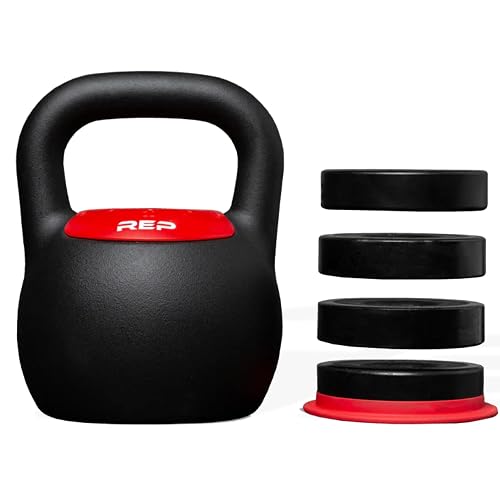
- Adjustable kettlebell: lets you change load without buying several bells, which suits progressive overload. View on Amazon
- Lifting straps or grip pads: help you hold heavier bells during rows and high pulls when grip fatigue limits you. View on Amazon
FAQ
How many days a week should I run a push pull legs kettlebell routine?
Three days a week is enough for most beginners, with a rest day between sessions. Intermediate lifters can run it four to six days, provided they manage fatigue and sleep well.
Can I build muscle with kettlebells alone?
Yes, especially when you progress the load and add reps or sets over time. Heavier bells and slower tempos increase the challenge as you get stronger.
Should I see a professional before starting?
If you have a heart condition, joint injury, or back pain, consult a doctor or physical therapist before starting a new strength program.
Conclusion
A push pull legs kettlebell routine gives you a clear weekly structure, balanced muscle coverage, and a simple way to progress. Start with lighter bells to learn form, then add reps, sets, and weight as you improve. Stick with the plan for at least six to eight weeks before judging results.
Related reading
- Workout Routine Push Pull Legs: A Step-by-Step Guide to Building Your Split
- Sample Push Pull Legs Routine: A 6-Day Plan With Sets and Reps
- Quick Push Pull Legs Routine: A Step-by-Step 3-Day Plan
- Push Pull/legs Routine Reddit: A Step-by-Step Guide to Building Your Split
- Push Pull Legs Workout Routine for Hypertrophy: A 6-Day Plan With Sets and Reps
- Push Pull Legs Workout Routine With Dumbbells: 3 Best Picks (2026)
Ready to choose one?
About Emily Parker
Emily Parker is part of our editorial team and reviews and edits our workout programs & splits guides, checking product details against manufacturer specifications and owner feedback.