As an Amazon Associate we earn from qualifying purchases. This page may contain affiliate links.
The Mike Mentzer workout routine, often called Heavy Duty, is a low-volume strength program built on one hard set per exercise, slow repetitions and full-body sessions spaced several days apart. You will learn how to set up the workout, choose exercises and loads, track progress and avoid the mistakes that make this approach either ineffective or unsafe. The method is demanding, so this guide focuses on the mechanics you need to run it correctly.
What the Mike Mentzer Workout Routine Is Based On
Mentzer built his approach on high-intensity training principles. The core idea is that a muscle needs a strong stimulus to grow, and that stimulus comes from taking a set close to momentary muscular failure. Once that stimulus is delivered, the body needs considerable recovery time before it can be stimulated again. More sets and more frequent training, in his view, add fatigue faster than they add useful stress.
Several principles run through the program:
- Intensity over volume. One properly executed working set per exercise, taken to the point where you cannot complete another rep with good form.
- Slow, controlled reps. Lifting and lowering at a deliberate pace reduces momentum and keeps tension on the muscle.
- Full-body effort in each session. Exercises cover the major muscle groups, usually in a single workout.
- Adequate recovery. Sessions are spaced apart rather than performed on consecutive days.
- Progressive overload. Load or reps increase over time, and you record every session to confirm progress.
Published versions of the routine differ in exercise selection and session layout, so treat any single version as a framework rather than a fixed script.
Equipment and Setup You Need
Before your first session, gather the following:
- A gym with machines or a home setup with adjustable dumbbells, a bench and a sturdy pull-up station.
- A training log, either paper or a spreadsheet, to record exercise, load, reps and how the set felt.
- A timer or a watch with a second hand, so you can keep your tempo consistent.
- A spotter or safety bars for presses and squats, since you will train close to failure.
- A way to load weight in small increments, such as 2.5 lb plates or micro-plates, for steady progress.
Machines are often the easiest choice for this style. They let you push to failure without needing a spotter for every movement, and they keep the path of motion consistent from rep to rep.
Step-by-Step: How to Run a Heavy Duty Session
Step 1: Warm up properly
Heavy, near-failure sets are hard on joints, so warm up before your working sets. Use two or three light sets of the first exercise, building load gradually until the working weight feels smooth. Light cardio for five to ten minutes and a few mobility drills for the joints you plan to load are enough. For more on this, see Warm-Up Routines Before Strength or Cardio.
Step 2: Choose a balanced set of exercises
A typical session includes 8 to 10 exercises that cover the body. Prioritize multi-joint movements first, then add isolation work. A reasonable selection:
- Leg press or squat variation
- Leg curl
- Chest press or push-up variation
- Vertical or horizontal row
- Lat pulldown or pull-up
- Overhead press
- Biceps curl
- Triceps extension or pushdown
- Calf raise
- Abdominal work
Keep the list manageable. If a session runs past about 45 minutes, you are probably doing more than the method needs.
Step 3: Use a slow tempo
Mentzer emphasized slow reps. A common interpretation is about four seconds on the lowering (eccentric) phase and a controlled but not pause-filled lift on the way up. Avoid bouncing at the bottom of a press or using momentum to swing a weight. If you need to cheat to finish a rep, the weight is too heavy for the rep range you are targeting.
Step 4: Take one working set to failure
For each exercise, perform one working set in a rep range of roughly 8 to 12. Choose a weight that lets you reach the target range and then keep going until you cannot complete another rep with good form. Stop there. Trying to add a second set rarely helps and can add fatigue without adding stimulus.
Step 5: Record the result and adjust
Write down the weight, reps and a short note on effort. Next session, aim to beat one of the numbers: add a rep at the same weight, or move up a small increment once you hit the top of the rep range with good form. This simple log is what turns a set of hard workouts into a progression.
Step 6: Space out the sessions
Recovery is the other half of the program. Sessions are usually spaced several days apart rather than performed daily. Your schedule might look like a full-body session, a rest day, another session, then several days off before repeating. Compare different templates in Weekly Workout Schedules That Fit the Guidelines.
Sample Full-Body Session
The table below shows one example of how a single session might be organized. Adjust exercises to your gym and experience level.
| Order | Exercise | Working sets | Target reps | Tempo focus |
|---|---|---|---|---|
| 1 | Leg press | 1 (to failure) | 8–12 | Slow lowering |
| 2 | Chest press machine | 1 (to failure) | 8–12 | Controlled press |
| 3 | Lat pulldown | 1 (to failure) | 8–12 | Full stretch at top |
| 4 | Seated shoulder press | 1 (to failure) | 8–12 | No momentum |
| 5 | Seated leg curl | 1 (to failure) | 8–12 | Slow lowering |
| 6 | Seated cable row | 1 (to failure) | 8–12 | Squeeze at contraction |
| 7 | Dumbbell curl | 1 (to failure) | 8–12 | Control the eccentric |
| 8 | Triceps pushdown | 1 (to failure) | 8–12 | Full lockout |
| 9 | Standing calf raise | 1 (to failure) | 10–15 | Pause briefly at the top |
Progression Over Weeks and Months
Progression is the part most people underestimate. Because you do only one set, every set has to count. A workable pattern looks like this:
- Establish your baseline. For the first two or three sessions, find a weight that lets you hit about 8 to 12 reps to failure.
- Add reps first. When you reach 12 clean reps, increase the load by the smallest increment available.
- Drop back into range. After a load increase, expect to land near 8 reps. That is normal.
- Deload when stalled. If you fail to progress across three to four sessions, reduce the load by 5 to 10 percent, rebuild, and try again.
Expect slower gains as you advance. Beginners often progress quickly on most lifts, while experienced trainees may need weeks to add a single rep. For a broader foundation on sets and progression, see Beginner Workouts: How to Start and Progress Safely.
Common Mistakes to Avoid
- Doing too many working sets. The method works on one hard set per exercise. Adding a second and third set often turns it into a standard high-volume workout.
- Stopping too early. If the last rep felt easy, the set was not taken to failure. Record the effort honestly.
- Going heavy without a safety plan. Training to failure on squats or bench press without a spotter or safety stops is a common route to injury.
- Rushing the tempo. Fast reps reduce the time under tension and make the workout less controlled.
- Training too often. Doing full-body sessions on back-to-back days defeats the recovery logic of the program.
- Skipping the log. Without records, you cannot tell whether you are progressing or simply tired.
- Ignoring pain. Muscle fatigue is expected. Sharp joint pain is not, and it calls for a break and possibly a professional opinion.
Who Should Be Cautious
High-intensity, to-failure training is not right for everyone. People with heart conditions, joint problems, recent injuries, high blood pressure or a history of training-related injury should check with a physician or a qualified coach before starting. Beginners may do better starting with a more gradual program, such as Gym Workouts for Beginners: Machines, Weights, Cables, and building technique before adding near-failure sets.
Tips for Making the Routine Work
- Keep sessions short and focused. Quality of effort matters more than total time.
- Use machines or guided movements when you are training alone, especially on presses and squats.
- Track bodyweight and performance together so you can judge whether recovery is keeping up.
- Eat enough protein and total calories to support recovery. Training intensity without fuel tends to stall.
- If you also do cardio, keep it light and separate from heavy lifting days to protect recovery.
- If you do not have access to a full gym, you can adapt the structure at home. See Home Workouts With Bodyweight and Minimal Equipment for ideas on loading and substitutions.
Recommended gear
These items make the routine easier to run safely and consistently at home or in a gym.
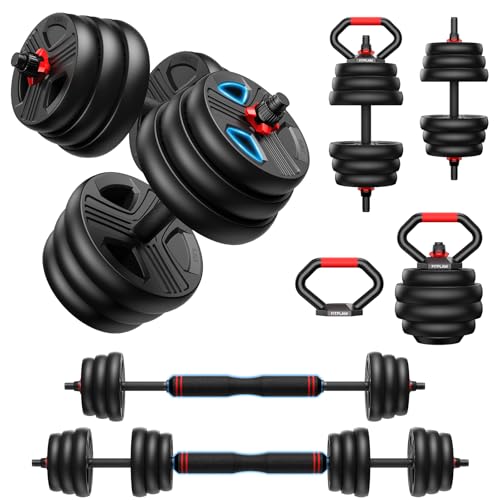
- Adjustable dumbbells let you make the small load jumps that steady progression depends on, and they cover many of the isolation exercises. Check price on Amazon
- A flat utility bench gives you a stable base for dumbbell presses, rows and curls, which keeps near-failure sets controlled. Check price on Amazon
- A hardbound training log makes recording weights, reps and effort simple, which is essential for tracking progression. Check price on Amazon
- A stopwatch or interval timer helps you hold the slow tempo consistently across every rep. Check price on Amazon
FAQ
How many sets should I do with the Mike Mentzer workout routine?
Most versions call for one working set per exercise, taken to momentary muscular failure. Warm-up sets do not count toward this total.
How often should I train?
Full-body sessions are typically spaced several days apart, not performed on consecutive days. Many people find a schedule with two or three sessions per week, separated by rest days, workable. Adjust based on recovery.
What rep range should I use?
A range of roughly 8 to 12 reps is common, with slightly lower or higher ranges used for calves and abdominal work. Choose a weight that lets you reach the range with good form.
Is the routine safe to do alone?
Machines are the safer choice when training without a spotter. Heavy free-weight presses and squats to failure carry more risk. If you have health concerns, speak with a physician before starting.
How long does it take to see results?
Progress depends on training history, nutrition, sleep and consistency. Log your workouts for at least 8 to 12 weeks to judge whether your strength and size are improving.