By Emily Parker
Updated November 2026
A 6 day push pull legs split trains every major muscle group twice a week by rotating pushing, pulling and leg movements across six sessions. This guide walks you through how to structure the week, choose exercises, set sets and reps, progress the load and avoid the mistakes that stall most lifters. By the end, you will have a complete printable plan you can run for 8 to 12 weeks.
What a 6 Day Push Pull Legs Split Actually Is
The split groups training by movement pattern rather than by body part. You do one push day (chest, shoulders, triceps), one pull day (back, biceps, rear delts) and one leg day (quads, hamstrings, glutes, calves), then repeat the cycle. Over six days you get two push sessions, two pull sessions and two leg sessions, which means each muscle group receives about two direct training stimuli per week.
Shopping for one? See our guide: Push Pull Legs Workout Split 6 Days: 3 Best Programs Compared (2026).
Two things make the six-day version different from the three-day one. First, frequency doubles, which is useful for hypertrophy because research generally supports training each muscle at least twice weekly when total weekly volume is matched. Second, each session can be shorter and more focused, so you spend less time per workout but more time overall in the gym. The tradeoff is recovery: six training days leave little margin, so sleep, nutrition and session intensity matter more than they do on a three-day plan.
Who Should Use This Split
This split suits intermediate lifters who have at least one year of consistent training, can recover from roughly 4 to 6 hours of weekly volume per muscle group, and have a schedule that allows six sessions. Beginners usually do better with full body training for their first 6 to 12 months because they build movement skill and recover faster on lower frequency. Advanced lifters often run this split with more specialized programming, such as varying rep ranges across the week.
If you are managing an injury, a medical condition or are returning from a long break, check with a doctor or physical therapist before starting a six-day schedule.
Step 1: Set Up Your Weekly Schedule
The standard rotation is Push, Pull, Legs, Push, Pull, Legs, followed by a rest day or a seventh day off. Some lifters prefer a 1-day rest after the sixth session, which means the cycle repeats cleanly each week. Others place rest after three days, using a Push-Pull-Legs-Rest-Push-Pull-Legs pattern, which can help if one day in the middle of the week feels like a grind.
- Monday: Push A
- Tuesday: Pull A
- Wednesday: Legs A
- Thursday: Push B
- Friday: Pull B
- Saturday: Legs B
- Sunday: Rest
Labeling each session as A or B matters. The A and B versions use different exercise selections and rep ranges so the body does not face identical stimuli twice in one week, which helps reduce overuse problems and keeps progression moving.
Step 2: Build Each Session
Push A and Push B
Push A emphasizes heavier compound pressing for strength. Push B shifts toward incline work, cable movements and higher reps for shoulder and chest volume.
| Exercise | Push A Sets x Reps | Push B Sets x Reps |
|---|---|---|
| Barbell bench press or dumbbell press | 4 x 5-7 | — |
| Incline dumbbell press | — | 3 x 8-10 |
| Overhead press (barbell or dumbbell) | 3 x 6-8 | — |
| Lateral raise | 3 x 12-15 | 4 x 12-15 |
| Cable chest fly | 3 x 12-15 | 3 x 12-15 |
| Triceps pushdown | 3 x 10-12 | — |
| Overhead triceps extension | — | 3 x 10-12 |
| Dips or close-grip press | — | 2 x 8-10 |
Pull A and Pull B
Pull A builds vertical pulling strength and heavy rows. Pull B adds more rear delt, mid-back and arm work.
| Exercise | Pull A Sets x Reps | Pull B Sets x Reps |
|---|---|---|
| Deadlift or Romanian deadlift | 3 x 5 (deadlift) | 3 x 8-10 (RDL) |
| Pull-up or lat pulldown | 4 x 6-8 | 3 x 10-12 |
| Barbell or chest-supported row | 3 x 6-8 | 3 x 8-10 |
| Seated cable row | — | 3 x 10-12 |
| Face pull | 3 x 12-15 | 3 x 12-15 |
| Barbell or dumbbell curl | 3 x 8-10 | 3 x 10-12 |
| Hammer curl | — | 2 x 10-12 |
Legs A and Legs B
Leg A leans on squat variations for quad and glute strength. Leg B shifts toward hip hinge and single-leg work.
| Exercise | Legs A Sets x Reps | Legs B Sets x Reps |
|---|---|---|
| Back squat or front squat | 4 x 5-7 | — |
| Leg press | 3 x 10-12 | — |
| Romanian deadlift | — | 4 x 6-8 |
| Bulgarian split squat | 3 x 8-10 per leg | 3 x 8-10 per leg |
| Leg curl | 3 x 10-12 | 3 x 10-12 |
| Leg extension | 3 x 12-15 | — |
| Standing or seated calf raise | 4 x 10-15 | 4 x 10-15 |
For a fuller worked example with sets and reps written out day by day, see Sample Push Pull Legs Routine: A 6-Day Plan With Sets and Reps. If you want a template you can copy into a spreadsheet or training app, Push Pull Legs Workout Template: A 6-Day Plan With Sets and Reps lays out the same structure in table form.
Step 3: Choose Rep Ranges and Set Volume
Heavy sets in the 4 to 8 rep range build strength. Moderate sets in the 8 to 12 range drive most hypertrophy. Isolation work in the 12 to 15 range adds volume with lower joint stress. Across the week, aim for roughly 10 to 20 hard working sets per muscle group, adjusted to your recovery.
- Start at the low end of the volume range for the first two weeks.
- Stop each set with 1 to 3 reps left in the tank for most exercises.
- Add a set to a muscle group only when you recover well between sessions.
- Drop a set if performance falls for two sessions in a row.
Step 4: Progress the Load Over Time
Use double progression. Pick a rep range, such as 3 sets of 8 to 10. Work at a weight where you can hit 8 reps on each set. When you hit 10 reps on all three sets with good form, increase the load by the smallest increment available (often 2.5 to 5 pounds for upper body, 5 to 10 pounds for lower body) and drop back to 8 reps.
Log every session. A notebook or training app is enough. Progress is easier to see over four weeks than over a single session, so review your logs every two weeks and adjust if a lift stalls.
Step 5: Plan Recovery and Deloads
Six training days require deliberate recovery. Aim for 7 to 9 hours of sleep, eat enough protein (roughly 0.7 to 1 gram per pound of body weight for most lifters seeking muscle gain), and keep total calories in line with your goal. Every 6 to 8 weeks, run a deload week: keep the same exercises but cut sets roughly in half and drop load to about 60 percent of your working weight. Then return to full volume.
Common Mistakes
- Doing every set to failure. Most sets should stop 1 to 3 reps short. Constant failure raises fatigue faster than it builds muscle.
- Skipping the leg day. The legs session is the one most often dropped. Missing it creates imbalance and cuts total weekly volume for the lower body.
- Adding exercises instead of progressing. More exercises rarely beat better progression on a few key lifts.
- Ignoring the rest day. Training seven days a week on this split leads to nagging joint and tendon issues.
- Keeping the same weights for months. Without a logged progression plan, the program stops working quietly.
- Using the A and B versions interchangeably. The variation is what keeps the week balanced.
Tips for Making the Split Work
- Warm up each session with 5 to 8 minutes of light cardio, then 2 to 3 ramp-up sets for the first lift.
- Put your heaviest compound lift first in each session while you are fresh.
- If a shoulder or elbow complains, swap the exercise for a variation with a different joint angle rather than pushing through pain.
- Schedule sessions for times when you can train without rushing, since a missed set is easier to recover than a compressed workout.
- If life interrupts the schedule, resume with the next session in the rotation rather than trying to make up missed days.
Recommended gear
Gear is optional, but a few items make this split easier to run consistently. A lifting belt helps on heavy squats and deadlifts once you are working near 80 percent of your max. Wrist wraps can support heavy pressing. A sturdy adjustable bench and a set of adjustable dumbbells make home or small-gym setups far more practical.
- Lifting belt keeps your core braced on heavy squats and deadlifts. View on Amazon
- Adjustable dumbbell set covers most of the push and pull dumbbell work without a full rack of weights. View on Amazon
- Adjustable workout bench supports flat, incline and decline pressing and seated rows. View on Amazon
- Lifting straps help you keep grip on heavy pulling sets so your back, not your forearms, limits the set. View on Amazon
FAQ
Is a 6 day push pull legs split good for building muscle?
Yes, for lifters who can recover from the volume. Training each muscle group about twice per week, with enough weekly sets and progressive overload, supports muscle growth well.
Can beginners run a 6 day push pull legs split?
Usually not at first. Beginners generally progress faster on full body or three-day splits. Move to six days once you have consistent technique and a year or more of steady training.
How long should each session take?
Most sessions run 50 to 75 minutes when you include warm-up and rest. If sessions run much longer, cut a set from the lower-priority accessory exercises.
Do I need a rest day with six training days?
Yes. A rest day, or at least a light activity day, helps recovery. Some lifters take a rest day in the middle of the week instead of at the end, which works well if one day feels especially hard.
How do I know if I am recovering enough?
Watch for persistent soreness that lasts beyond 72 hours, declining performance across two or more sessions, poor sleep and irritable mood. If these appear, reduce a set or two per muscle group or take a deload week.
Should I use the same exercises every week?
Keep the core lifts for 6 to 8 weeks so you can track progression, then swap accessories if you want variety or if an exercise bothers a joint.
Can I follow this split at home?
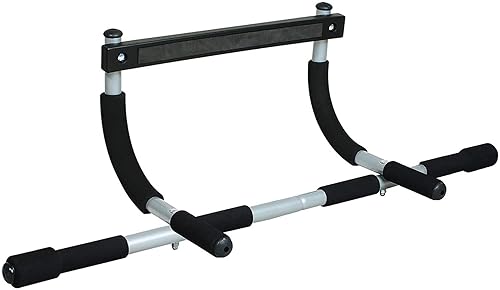
Yes, with adjustable dumbbells, a bench and a pull-up bar. You will lose some barbell loading options, so plan for higher reps and slower progression on lower-body work.
Who should consult a professional before starting?
Anyone with a heart condition, recent surgery, joint injury, blood pressure concerns or other medical issue should speak with a doctor or qualified coach before beginning a high-frequency lifting program.
Conclusion
A 6 day push pull legs split gives you twice-weekly frequency for every major muscle group, with sessions short enough to focus on quality. Run the A and B versions, use double progression, log your work and protect recovery with sleep, protein and a periodic deload. Stick with the plan for 8 to 12 weeks before judging results, and adjust volume based on how your body responds.
Related reading
- Women's Push Pull Legs 3-Day Split: A Step-by-Step Plan for Strength and Shape
- Quick Push Pull Legs Routine: A Step-by-Step 3-Day Plan
Ready to choose one?
About Emily Parker
Emily Parker is part of our editorial team and reviews and edits our workout programs & splits guides, checking product details against manufacturer specifications and owner feedback.