By Theo Dawson
A push pull legs workout 6 days a week splits your training into three repeating sessions: push (chest, shoulders, triceps), pull (back, biceps, rear delts) and legs. You train each muscle group twice per week, which is a strong frequency for hypertrophy and strength. This guide walks you through how to set up the schedule, choose exercises, pick sets and reps, progress over time and avoid the mistakes that stall most lifters on this split.
What the Push Pull Legs 6 Day Split Looks Like
The six-day version runs the three sessions in order, then repeats. Most people train the first three days, take one day off and then run the cycle again, so the week looks like this:
Shopping for one? See our guide: 7 Best Push Pull Legs Split Programs and Tools for 2026.
| Day | Session | Main Focus |
|---|---|---|
| Monday | Push A | Chest, shoulders, triceps |
| Tuesday | Pull A | Back, biceps, rear delts |
| Wednesday | Legs A | Quads, hamstrings, glutes, calves |
| Thursday | Push B | Chest, shoulders, triceps (variation) |
| Friday | Pull B | Back, biceps, rear delts (variation) |
| Saturday | Legs B | Quads, hamstrings, glutes, calves (variation) |
| Sunday | Rest | Recovery |
The “A” and “B” versions use different exercise selections or rep ranges so the second session is not a copy of the first. This keeps you training the same muscles twice a week without repeating the same stress every time.
Before You Start: What You Need
Before you write your first session, gather the basics:
- Access to a barbell with plates and a squat rack or power rack
- An adjustable flat bench, and ideally an incline bench
- A set of dumbbells covering light to heavy loads
- A pull-up bar or lat pulldown machine
- Cable station for face pulls, triceps and curls
- A notebook or app to log weights, sets and reps
Logging is not optional on a six-day split. Without written numbers, you cannot tell whether you are progressing.
Step 1: Choose Your Exercises for Each Session
Build each session around one or two compound lifts, then add accessories. Compounds handle most of the load and give you the clearest progression numbers.
Push Sessions
- Push A: Barbell bench press (4 sets of 6–8), seated overhead press (3 sets of 8–10), incline dumbbell press (3 sets of 10–12), lateral raises (3 sets of 12–15), triceps pushdowns (3 sets of 10–12)
- Push B: Incline barbell press or dumbbell bench (4 sets of 8–10), dumbbell shoulder press (3 sets of 10–12), dips or cable chest fly (3 sets of 10–12), cable lateral raises (3 sets of 12–15), overhead triceps extension (3 sets of 10–12)
Pull Sessions
- Pull A: Conventional deadlift or Romanian deadlift (3 sets of 5–6), pull-ups or lat pulldown (3 sets of 6–10), seated cable row (3 sets of 8–10), face pulls (3 sets of 12–15), barbell or dumbbell curls (3 sets of 8–12)
- Pull B: Barbell row (4 sets of 6–8), chest-supported row (3 sets of 10–12), single-arm dumbbell row (3 sets of 10–12 each side), rear delt fly (3 sets of 12–15), hammer curls (3 sets of 10–12)
For more on pulling movements, see Upper-Body Exercises: Push and Pull Movements.
Leg Sessions
- Legs A: Back squat (4 sets of 5–8), Romanian deadlift (3 sets of 8–10), leg press (3 sets of 10–12), seated leg curl (3 sets of 10–12), standing calf raise (4 sets of 10–15)
- Legs B: Front squat or hack squat (3 sets of 8–10), Bulgarian split squat (3 sets of 8–10 per leg), hip thrust (3 sets of 8–12), lying leg curl (3 sets of 10–12), seated calf raise (3 sets of 12–15)
Step 2: Set Your Sets, Reps and Rest
Use these ranges as defaults:
- Heavy compounds (1–6 reps): 3–5 sets, rest 2–3 minutes
- Moderate compounds (6–10 reps): 3–4 sets, rest 90–120 seconds
- Isolation work (10–15 reps): 2–3 sets, rest 60–90 seconds
Stop most working sets about 1–3 reps before failure. If you can do many more reps than the target, the load is too light. If you cannot reach the bottom of the range with clean form, drop the weight slightly.
Step 3: Progress Your Training Over Time
Progression is what turns a split into a plan. Use double progression: pick a rep range (for example 8–10), work up to the top of it with good form, then add weight the next session and start again at the bottom. For a barbell bench at 8–10 reps, if you hit 3 sets of 10 at 185 lb, move to 190 lb (or the smallest plate jump your gym allows) and aim for 3 sets of 8.
Add small increments every two to four weeks on accessories and every one to two weeks on main lifts if the reps are moving well. When progress stalls for three consecutive sessions, adjust one variable: add a set, change the exercise, or take a deload week at roughly 60 percent of normal load.
Step 4: Plan Your Warm-Up
Spend five to ten minutes on light cardio, then perform two or three ramp-up sets on your first compound lift. For a 185 lb bench, you might do 95 lb for 8 reps, 135 lb for 5 reps and 165 lb for 2 reps before your working sets. Warm up the specific joints you are about to load, especially shoulders on push days and hips and knees on leg days.
Step 5: Recover Between Sessions
Six training days leave little margin for poor recovery. Aim for seven to nine hours of sleep, eat enough protein (a common target is around 0.7 to 1 gram per pound of body weight, adjusted for your goals) and keep your rest day genuinely light. For broader guidance on rest and sleep, read Recovery, Rest Days and Sleep for Training.
Common Mistakes to Avoid
- Making every session identical. The A and B versions exist for a reason. Rotate exercises and rep ranges every few weeks.
- Skipping leg day. Legs are the most demanding session. Lifters who drop them often end up with lopsided physiques.
- Training to failure on every set. Leave one to three reps in reserve on most work, or fatigue will accumulate faster than you recover.
- Ignoring the pull side. Lifters who push a lot and pull less often develop rounded shoulders and nagging joint pain. Match your pulling volume to your pushing volume.
- Not tracking. If you cannot name last week’s weights, you are guessing at progression.
- Adding too much volume too fast. Start with the set counts above and add one set per exercise only after two or three weeks of steady progress.
Tips for Making the Split Work Long Term
- Schedule your sessions at the same times each week when possible.
- If a six-day week is unrealistic, the same split works on three days, but each muscle is trained once per week. You can compare that approach with Weekly Workout Schedules That Fit the Guidelines.
- Deload every five to eight weeks by cutting sets roughly in half and dropping load.
- If you are new to lifting, begin with the full-body option in Full Body Workout Routine: A Step-by-Step Plan for Beginners for a few months before moving to six days.
- Stop any exercise that causes sharp joint pain and substitute a variation with a comfortable range of motion.
Recommended Gear
- Lifting straps: Useful on heavy pulls once your grip becomes the limiting factor on rows and deadlifts. View on Amazon
- Lifting belt: Helps brace on heavy squats and deadlifts for sets in the 3–6 rep range. View on Amazon
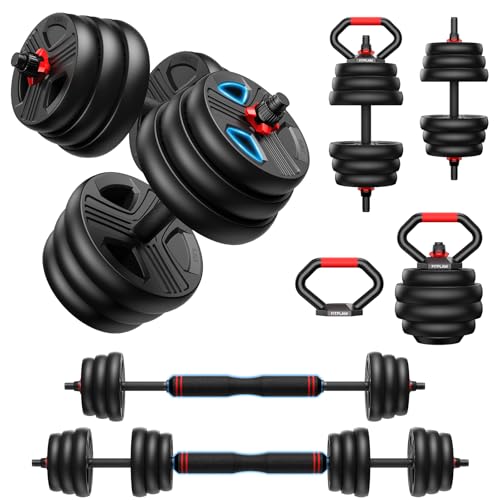
- Adjustable dumbbells: Let you cover a wide load range for accessory work without filling a rack. View on Amazon
- Training log notebook: A simple way to record sets, reps and loads so progression is visible week to week. View on Amazon
FAQ
Is a push pull legs workout 6 days a week too much for beginners?
It can be. Most beginners do better with three or four full-body sessions for their first few months. Move to the six-day split once you can recover well and your technique on the main lifts is consistent.
How long should each push pull legs session take?
Most sessions run 60 to 75 minutes including warm-up. Keep rest periods on heavy compounds intentional and limit accessories to what the plan calls for.
Can I do push pull legs 6 days with only dumbbells?
Yes. Replace barbell lifts with dumbbell variations such as dumbbell bench, dumbbell row, goblet squats and Romanian deadlifts. Progression then relies on heavier dumbbells or slower tempo and extra reps.
Should I train abs on this split?
You can add two or three sets of core work at the end of any session. Abs recover quickly and do not need their own dedicated day.
What if I miss a day?
Resume the sequence where you left off rather than trying to make up the missed session in the same day. Consistency over several weeks matters far more than any single workout.
Is this split good for building muscle or for strength?
Both. Heavy compound work in the lower rep ranges builds strength, while moderate reps and accessory volume drive muscle growth. The split accommodates either goal depending on how you set your rep targets.
Do I need to see a professional before starting?
If you have a heart condition, joint injury, high blood pressure or are returning from a long layoff, consult a physician or qualified coach before starting a high-frequency program.
Conclusion
A push pull legs workout 6 days a week gives you high training frequency with a clear structure that is easy to follow. Set up your A and B sessions, use double progression with written logs, and manage recovery as carefully as your training. Start with conservative volume, add sets only when progress is steady, and adjust the plan as your strength and schedule change.
Related reading
- Push Pull Legs Workout Plan: 6-Day Split With Sets and Reps
- Upper Lower vs Push Pull Legs (2026): Which Is Better for Your Training?
Ready to choose one?

About Theo Dawson
Theo covers workout programs & splits, comparing specs, features and long-term owner feedback to help readers choose with confidence.